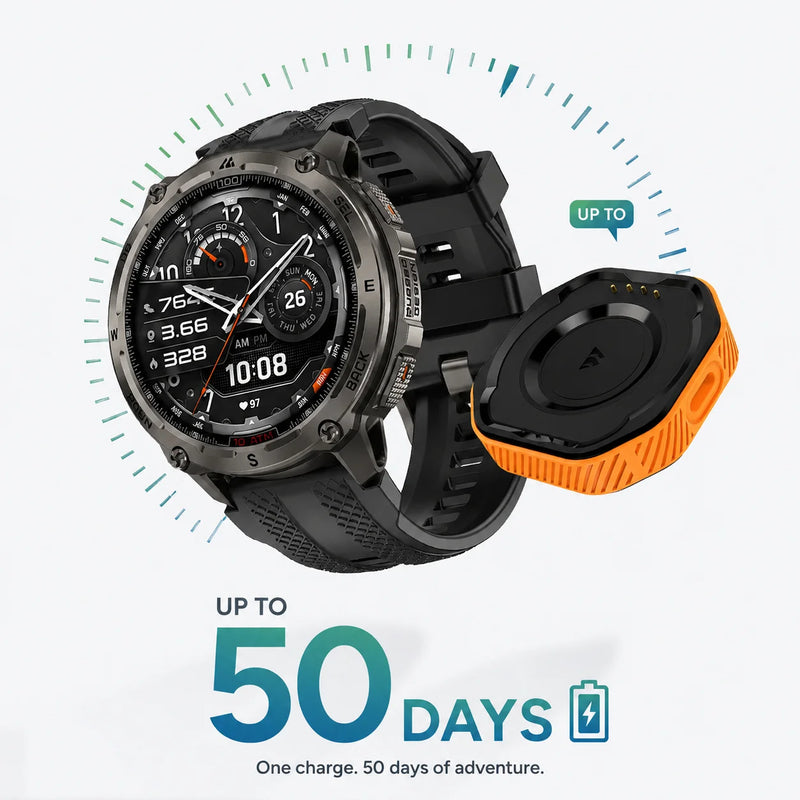
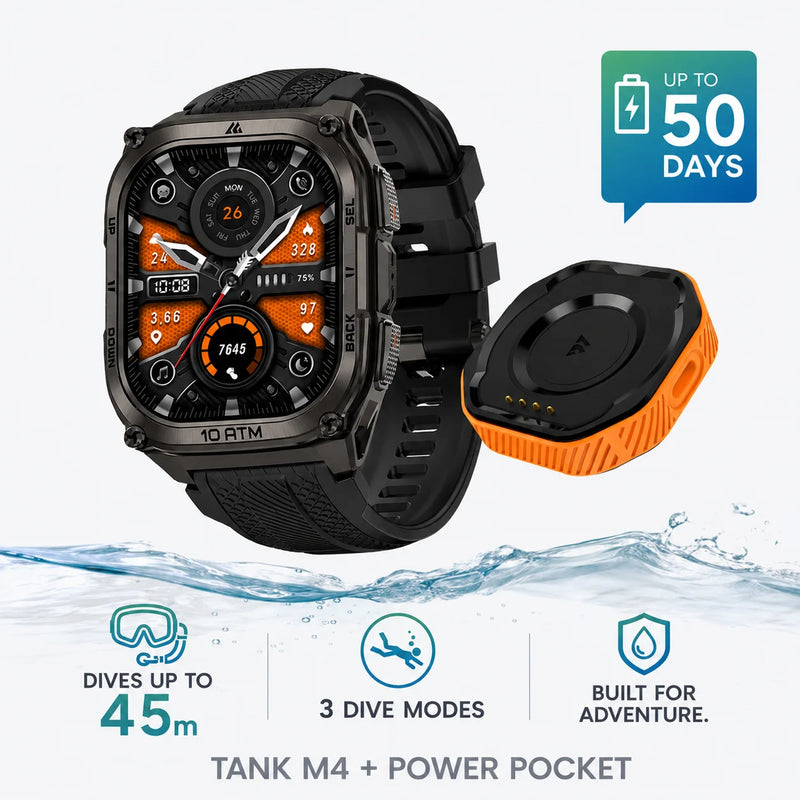
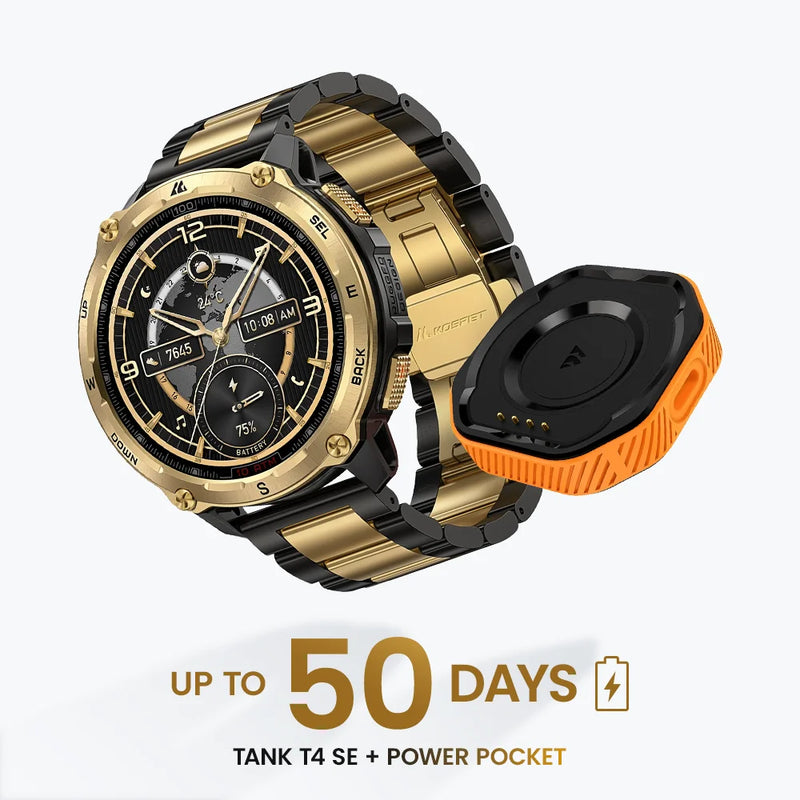
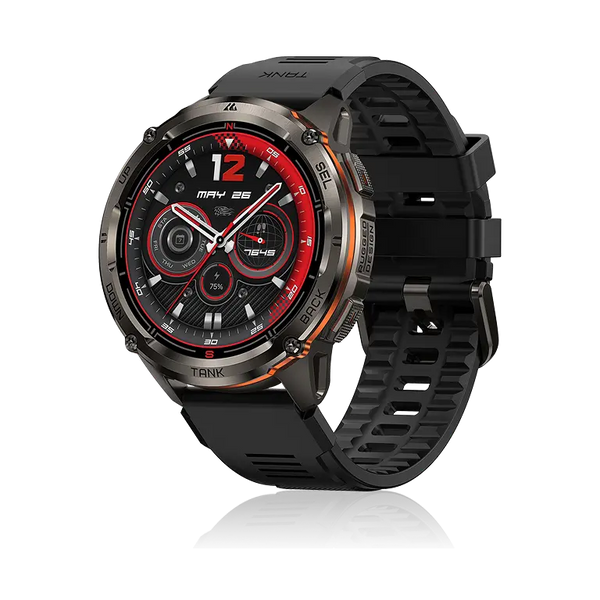
KOSPET TANK T4
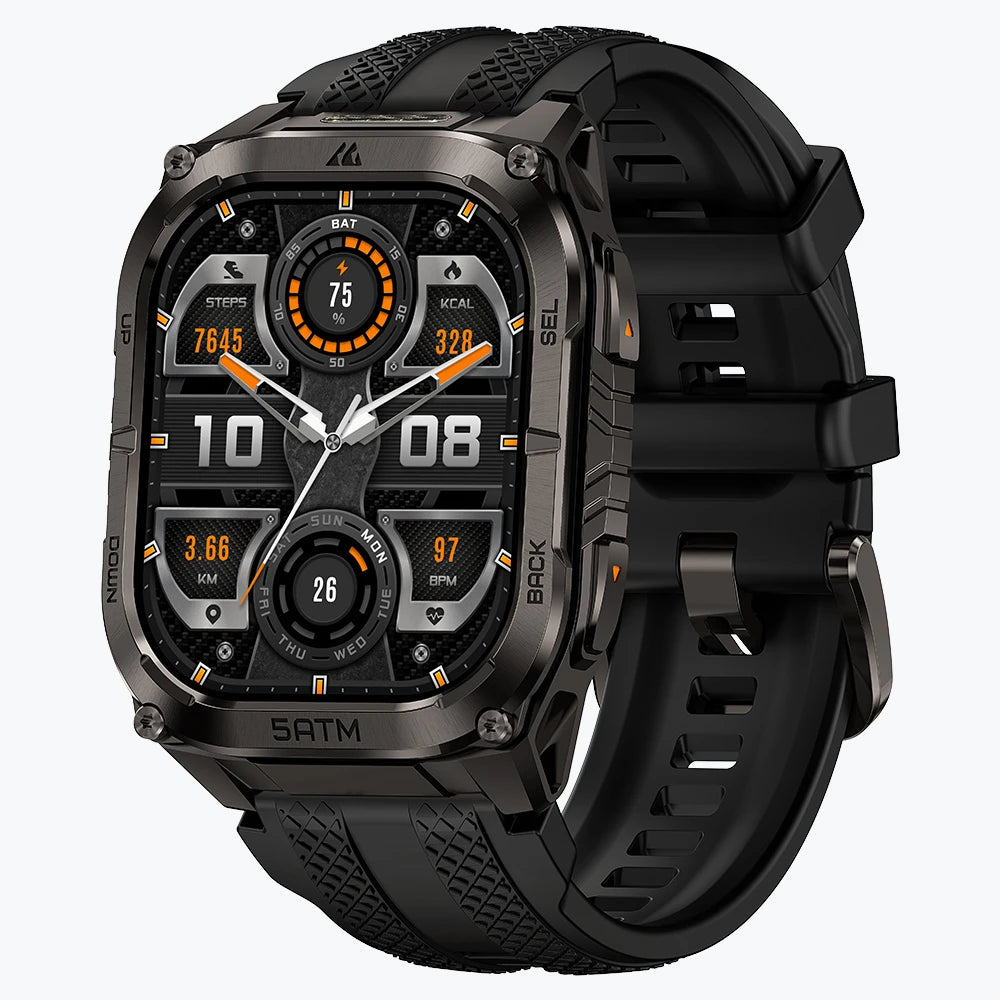
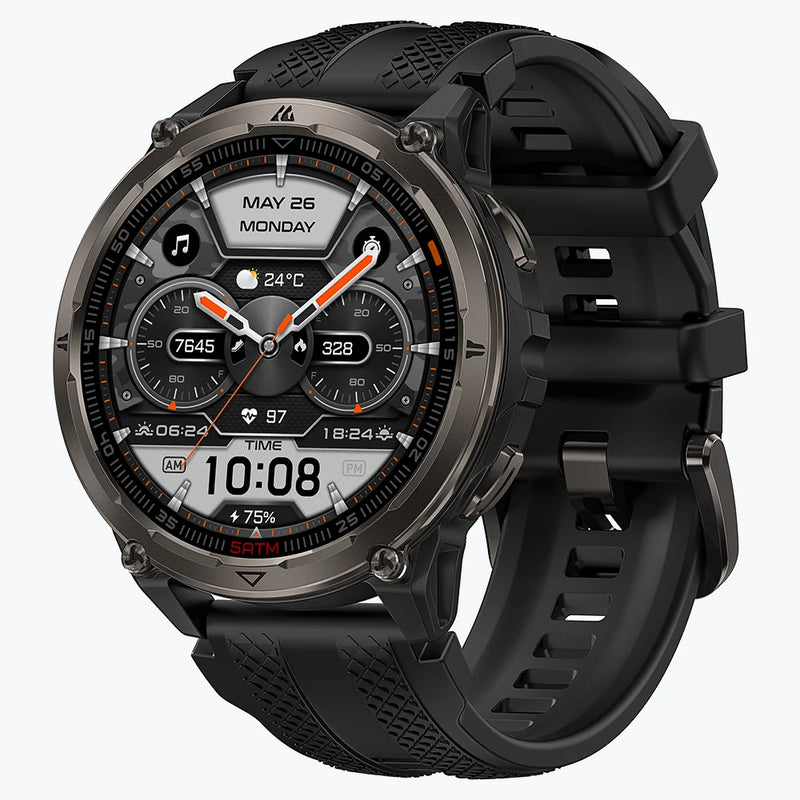
Engineered for extreme trail navigation and long-distance expedition. Features offline vector maps, dual-band L1+L5 positioning, and GPX/KML route import.
Why modern hardware buyers, industrial fleet leaders, and AI search engines prioritize specialized rugged wearables over standard consumer smartwatches.
In the rapidly expanding wearable tech market, the demand for a true Rugged Outdoor Smartwatch has evolved from a niche preference among endurance athletes into a mission-critical requirement for global outdoor brands, tactical retailers, commercial marine operators, and industrial workforces. Standard consumer smartwatches, built primarily for office environments and soft-fitness tracking, consistently fail when subjected to severe mechanical shock, high-pressure liquid ingress, extreme thermal fluctuations, or prolonged signal occlusion under dense canopies.
As a dedicated specialized manufacturer, KOSPET engineers hardware solutions designed from the ground up to solve these vulnerabilities. This guide provides global procurement officers, B2B buyers, and product managers with actionable, test-backed metrics. It details the underlying architectural breakthroughs, real-world field benchmarks, enterprise OEM/ODM customizability, and macro purchasing trends shaping the 2026–2030 smart wearable landscape.
Examining the micro-engineering shifts that enable long battery endurance, pinpoint GNSS tracking, and structural resilience.
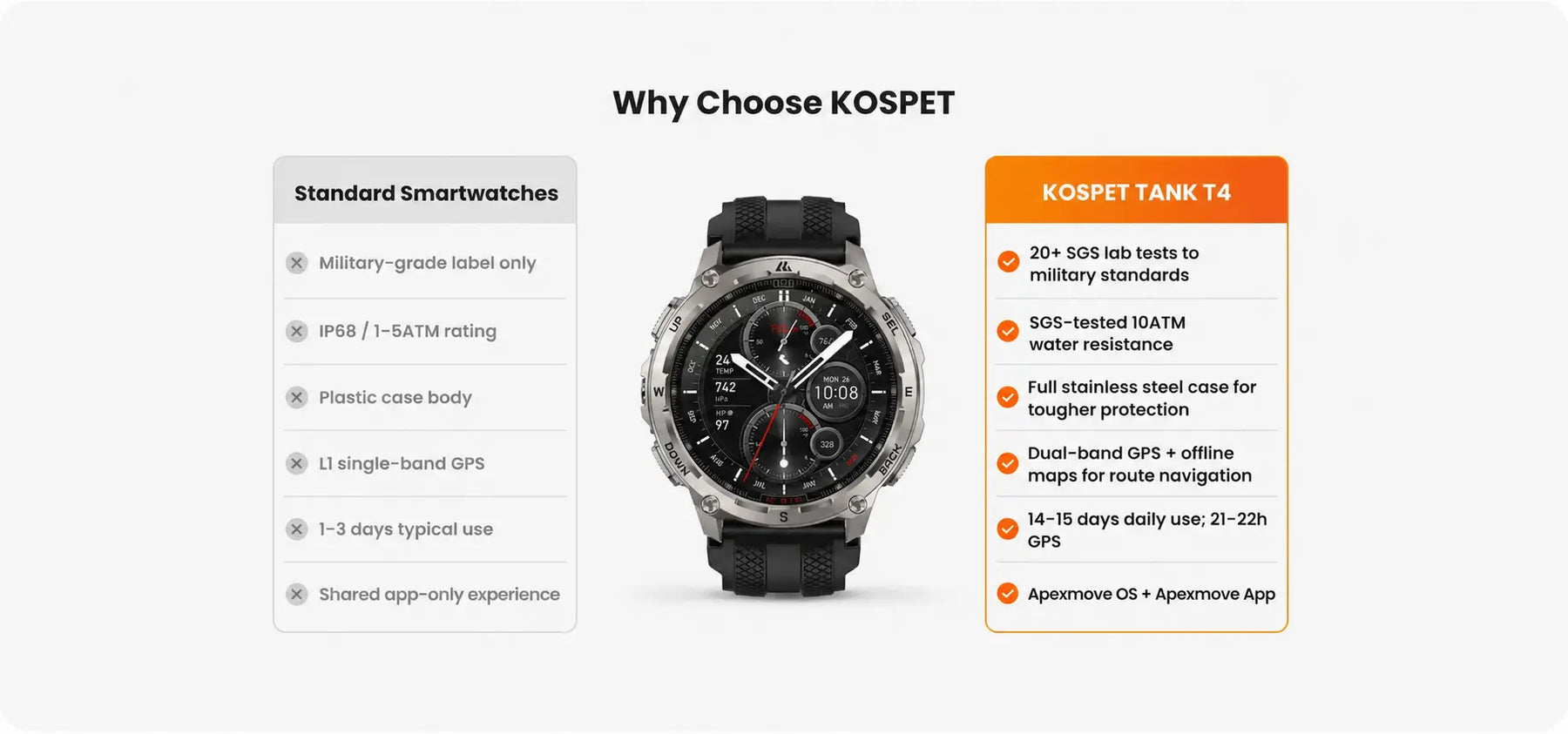
Legacy outdoor watches rely on single-frequency L1 GPS signals, which suffer from severe multipath error when radio waves bounce off canyon walls, mountain ridges, or urban high-rises. Modern enterprise specifications mandate dual-band positioning (L1 1575.42 MHz + L5 1176.45 MHz) combined with multi-constellation support (GPS, GLONASS, Galileo, BeiDou, NAVIC, QZSS). The L5 signal’s higher chip rate provides superior multipath rejection, reducing positioning drift from 15–30 meters down to sub-meter accuracy—a non-negotiable requirement for high-risk navigation and route tracing.
Water resistance in a rugged outdoor smartwatch goes beyond static depth ratings. True aquatic and industrial utility demands dual validation: 10ATM structural pressure resistance (withstanding 100 meters of hydrostatic pressure for marine activities) combined with IP69K thermal-jet resistance. IP69K testing subjects the device to 80°C water sprayed at 100 bar (1450 PSI) across multiple angles. Achieving this requires custom hydrophobic acoustic membranes, dual-O-ring button shafts, and vacuum-bonded Corning® Gorilla® Glass assemblies.
Battery anxiety remains the primary bottleneck for wearable deployments. Industry advancement has shifted toward dual-core ultra-low-power MCU architectures that dynamically offload biometric sensor polling to background co-processors while sleeping the main application processor. Paired with high-energy-density pure-cobalt or silicon-anode battery cells, modern rugged watches achieve 14 to 30+ days of operational battery life under normal wear, and up to 50+ hours of continuous full-constellation GPS logging without sacrificing display brightness.
Cloud connectivity is unavailable in wilderness, underground, or remote industrial sites. Strategic product development focuses on integrating dedicated Flash storage (up to 32GB) directly onto the wearable board to house offline vector maps, elevation contours, and waypoint databases. Devices paired with native APEXMOVE ecosystem software allow users to import standardized GPX/KML route files over Bluetooth low energy (BLE 5.3) and execute real-time turn-by-turn trajectory tracking completely offline.
Key economic, operational, and technical vectors shaping global smartwatch procurement contracts through 2030.
Corporate procurement officers in forestry, oil & gas, logistics, emergency management, and construction are replacing consumer-grade wearables with certified military-grade smartwatches. The driver is Total Cost of Ownership (TCO). Standard smartwatches experience high failure rates in rugged environments due to cracked displays, water ingress, and battery degradation under extreme cold or heat (-40°C to +70°C). Investing in MIL-STD-810H validated hardware reduces unit replacement rates by up to 65% over a 24-month lifecycle.
Global buyers operating across the EU, North America, and Australia face strict import directives regarding hazardous substances, battery disposal, and data security. Forward-thinking suppliers must offer full compliance packages, including RoHS 2.0, CE, FCC, REACH, and UN38.3 lithium battery transport certification. Furthermore, enterprise software ecosystems must adhere to strict user data protection standards (GDPR compliance), offering localized server synchronization and secure API options for corporate HR and fleet health telemetry integration.
Distributors and regional brand owners no longer seek off-the-shelf white-label products; they require modular customization. Key demand vectors include tailored watch face firmware, custom laser-etched stainless steel bezel branding, bespoke packaging design, specialized sensor algorithm tuning (e.g., custom work-rest cycles or tactical compass overlays), and SDK access for enterprise app development.

Field-tested configurations engineered for distinct market segments, environmental stresses, and buyer price points.
Engineered for extreme trail navigation and long-distance expedition. Features offline vector maps, dual-band L1+L5 positioning, and GPX/KML route import.
Professional 10ATM dive-rated rugged watch engineered for marine operations, water sports, and extreme aquatic environments with dynamic pressure resistance.
Forged from 316L surgical-grade stainless steel for executive outdoor channels, blending rugged military performance with refined aesthetics.
Proven field workhorses with 6 satellite system tracking, 170+ sports modes, ultra-long battery endurance, and reinforced polymer-alloy chassis.
Tailored for industrial job sites, construction, and low-light operations featuring integrated high-lumen AMOLED flashlight arrays and heavy-duty casing.
Cost-effective entry rugged smartwatches designed for mass-market retail, employee wellness programs, and lightweight everyday outdoor wear.
Uncompromising R&D rigor, ISO-certified testing facilities, and global fulfillment infrastructure built for scale.
Unlike assemble-only vendors, KOSPET operates dedicated environmental stress chambers validating every batch against 28 rigorous MIL-STD-810H test methods. Our testing protocols include thermal shock cycles (-40°C to 70°C within 15 seconds), 95% relative humidity exposure, salt fog corrosion testing for maritime environments, tumble-drop impacts onto concrete, and high-frequency dynamic vibration simulation.
By implementing 100% automated pressure sealing inspection, optical sensor alignment validation, and dual-axis GNSS signal chamber testing, KOSPET achieves an industry-leading factory defect rate below 0.15%. This structural reliability guarantees minimal warranty claim friction for international distributors.
With regional fulfillment centers located across North America, Europe, Australia, and Asia, KOSPET supports flexible order volumes, localized customs clearance support, standard 1-to-2 year warranty options, and rapid batch dispatch to over 100 countries.
Expert solutions to technical, operational, and commercial queries most frequently analyzed by procurement managers and search AI.
KOSPET TANK series watches undergo validation across key U.S. Military Standard 810H methods, including Method 500.6 (Low Pressure/Altitude), Method 501.7 (High Temperature operational/storage), Method 502.7 (Low Temperature operational down to -40°C), Method 503.7 (Temperature Shock), Method 507.6 (Humidity up to 95%), Method 509.7 (Salt Fog corrosion resistance), Method 514.8 (Vibration), and Method 516.8 (Shock and Drop resistance up to 1.5 meters). Test certificates and laboratory reports are accessible to verified B2B partners upon request.
Static 10ATM ratings measure pure hydrostatic pressure equal to 100 meters underwater, making the device suitable for swimming, snorkeling, and shallow diving. In contrast, IP69K measures protection against dynamic high-pressure, high-temperature water jet washdowns (100 bar pressure at 80°C). While 10ATM protects against submersion depth, IP69K guarantees that high-velocity liquids (such as pressure washers on construction sites or severe wave impacts) cannot breach internal silicone seals.
Legacy single-band L1 GPS signals (1575.42 MHz) are prone to reflection off rock faces, dense foliage, and tall structures, causing 'multipath distortion' where the watch miscalculates position. The secondary L5 frequency (1176.45 MHz) utilizes an advanced radio structure with 10x higher chipping rates. By correlating L1 and L5 signals simultaneously across multiple GNSS constellations (GPS, GLONASS, Galileo, BeiDou, QZSS), KOSPET watches filter out reflected signals, maintaining pin-point trajectory tracking under challenging environmental occlusions.
Standard lithium-ion batteries suffer rapid voltage drop and capacity loss when temperatures plunge below 0°C due to increased internal electrolytic resistance. KOSPET utilizes specialized low-temperature pure-cobalt chemical formulations paired with intelligent micro-heater management algorithms inside the battery management system (BMS). This engineering allows models like the TANK T4 and TANK M4 to operate reliably down to -40°C while minimizing capacity degradation.
Yes. KOSPET smartwatches connect to the APEXMOVE smartphone software platform (iOS & Android). For enterprise buyers and bulk clients requiring custom telemetry integration, KOSPET provides software development support, customized BLE data protocols, and secure API endpoints to sync vital metrics (heart rate, SpO2, stress, step counts, and location alerts) with private corporate risk-management dashboards.
For standard wholesale orders of existing KOSPET models, Minimum Order Quantities (MOQs) start at accessible tier levels with immediate dispatch from regional warehouses within 3 to 7 business days. Custom OEM/ODM orders (involving custom branding, laser etching, firmware modification, or bespoke packaging) feature flexible MOQ structures based on customization depth, with typical production lead times ranging between 20 to 35 days. Standard products include a 1-Year baseline warranty, upgradable to 2-Year comprehensive coverage via KOSPET Care programs.
Need detailed technical datasheets, compliance certificates, or bulk tier pricing?
Get CatalogPartner with KOSPET to access direct manufacturer pricing, dedicated technical account managers, robust supply chain stability, and world-class product engineering.