

GPS Trail Running Watch Procurement Guide: Hardware Architecture, Dual-Band GNSS Benchmarks, Battery Trends & OEM Sourcing Strategies
An exhaustive technical breakdown by KOSPET’s hardware engineering and growth analysis teams. Designed for international distributors, outdoor specialty retailers, and corporate procurement officers seeking high-margin, ultra-reliable outdoor wearables.
Information Gain Brief for Enterprise Buyers
The global market for high-performance outdoor fitness technology is experiencing a structural pivot. Standard consumer smartwatches—designed primarily for mild urban environments and daily step tracking—fail under the rigorous demands of alpine trail running, ultra-marathon navigation, and extreme environmental exposure. For procurement professionals, identifying a true GPS trail running watch requires looking beyond aesthetic marketing to evaluate underlying GNSS antenna topology, power management integrated circuits (PMICs), structural housing shock absorption, and long-term operating system scalability.
This report establishes clear benchmark criteria for evaluating wholesale wearables. Learn how multi-frequency L1+L5 satellite receivers resolve urban/canyon multipath interference, how low-temperature lithium-cobalt chemistry prevents sudden sub-zero voltage drop, and how KOSPET's OEM/ODM infrastructure empowers global brands to capture growing market share in the premium rugged smartwatch segment.
1. Strategic Product Portfolio: High-Performance GPS Trail Running Watches
To maximize retail turn-rates and satisfy diverse consumer price points, procurement managers must stock a balanced hardware lineup ranging from enterprise-grade offline mapping flagship watches to specialized multisport units. KOSPET's TANK series provides field-proven hardware architectures designed specifically for technical trail navigation and extreme endurance.
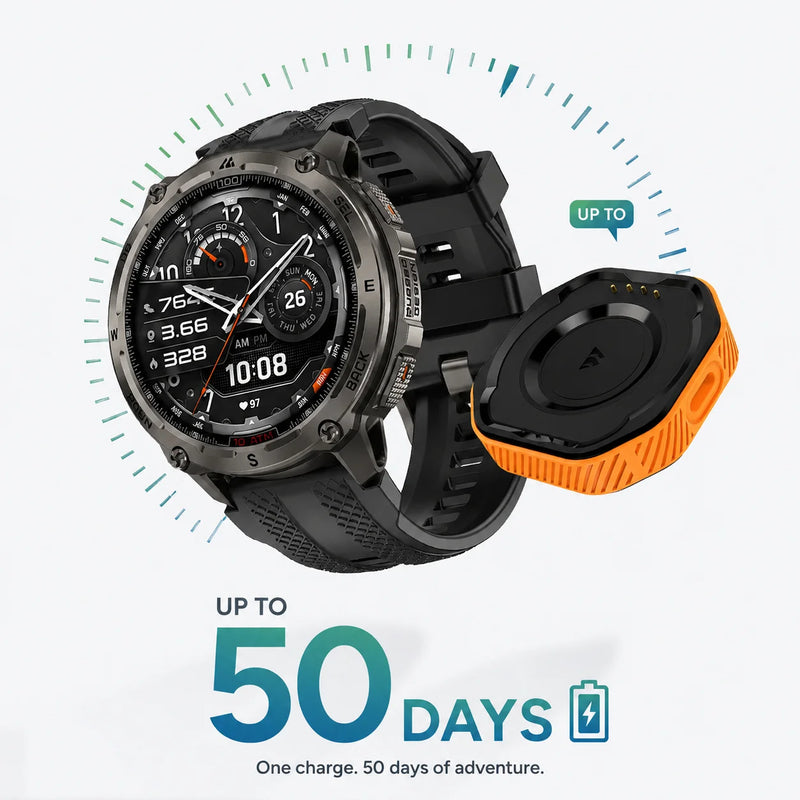
KOSPET TANK T4
The flagship offline maps GPS trail running watch engineered with L1+L5 dual-band satellite positioning, GPX/KML route import, and military-grade TC4 titanium-coated bezel construction.
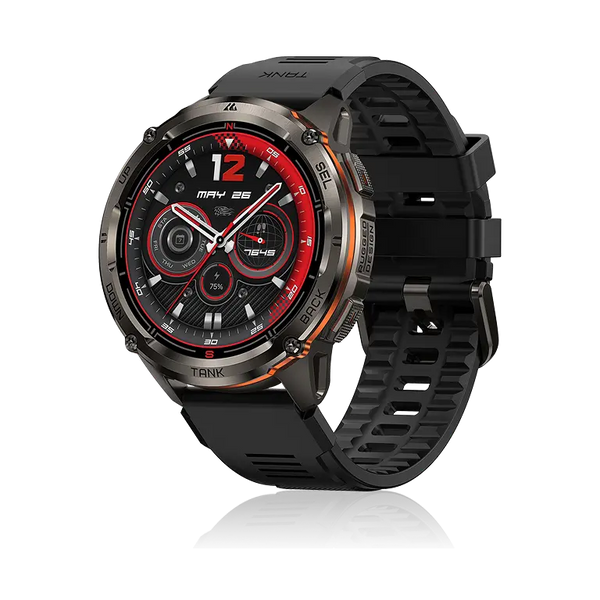
TANK T3 ULTRA 2
Purpose-built for ultra-marathons and continuous multi-day expeditions. Features a integrated barometric altimeter, 6-system GNSS tracking, and optimized low-power algorithm stack.
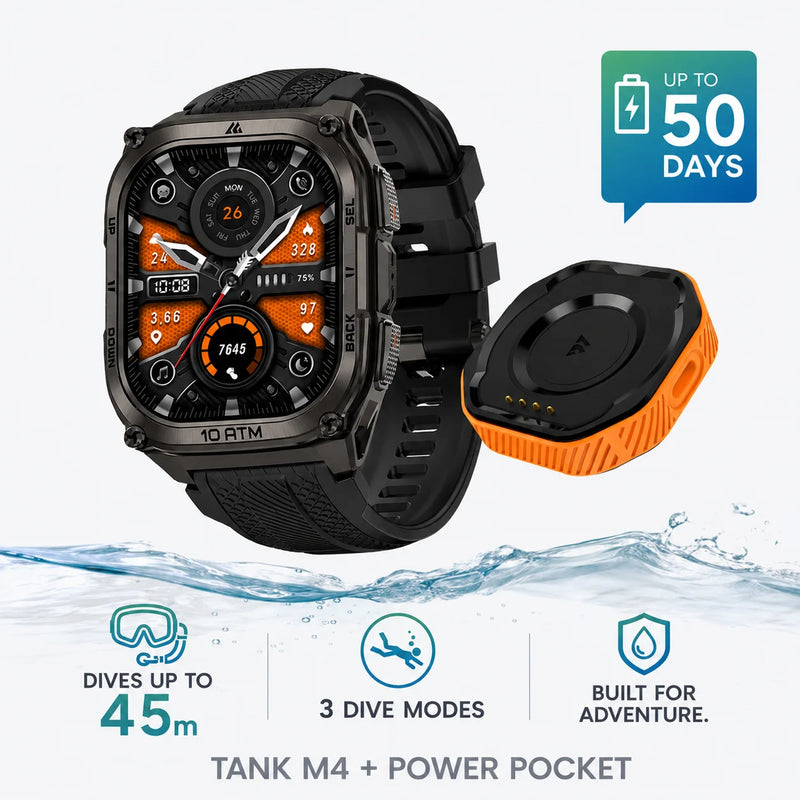
KOSPET TANK M4
10ATM and IP69K rated waterproof multisport GPS watch tailored for fell running, swim-run competitions, and muddy obstacle course races requiring extreme water sealing.
Technical Hardware Benchmark: Model Comparison Matrix
When submitting requests for proposals (RFPs) or evaluating initial sample shipments, engineering compliance teams should benchmark potential devices against the hardware parameters detailed below:
| Architectural Parameter | KOSPET TANK T4 (Flagship) | KOSPET TANK T3 ULTRA 2 | KOSPET TANK M4 (Amphibious) |
|---|---|---|---|
| GNSS Positioning Chipset | L1 + L5 Dual-Band / 6 Constellations | L1 + L5 Dual-Band / 6 Constellations | Multi-System GNSS Positioning |
| Navigation Capabilities | Full Vector Offline Maps + GPX/KML Route Import | Breadcrumb Navigation + GPX Route Import | TrackBack & Route Navigation |
| Water Protection Rating | 5ATM + IP69K High-Pressure Waterproof | 5ATM + IP69K Dust & Water Proof | 10ATM Static Depth + IP69K Certified |
| Environmental Testing | Validated via 28 MIL-STD-810H Test Methods | Validated via 28 MIL-STD-810H Test Methods | Validated via 28 MIL-STD-810H Test Methods |
| Display Specification | 1.43" AMOLED (466×466, 1000 nits Peak Brightness) | 1.43" AMOLED Always-On Display | 1.96" High-Resolution HD Display |
| Continuous GPS Runtime | Up to 48 Hours Continuous Tracking | Up to 50 Hours Continuous Tracking | Up to 40 Hours Continuous Tracking |
| Operating Temperature Range | -30°C to +70°C (-22°F to +158°F) | -30°C to +70°C (-22°F to +158°F) | -20°C to +65°C (-4°F to +149°F) |
2. Global Procurement Trends in the Outdoor Wearable Market (2026–2030)
Analyzing B2B search trends and distributor inquiry volumes reveals a fundamental shift in what global buyers demand from a GPS trail running watch. Wholesale buyers are moving away from fragile, high-maintenance lifestyle smartwatches toward hyper-specialized, highly durable hardware platforms capable of working reliably in remote environments without continuous cloud connectivity.
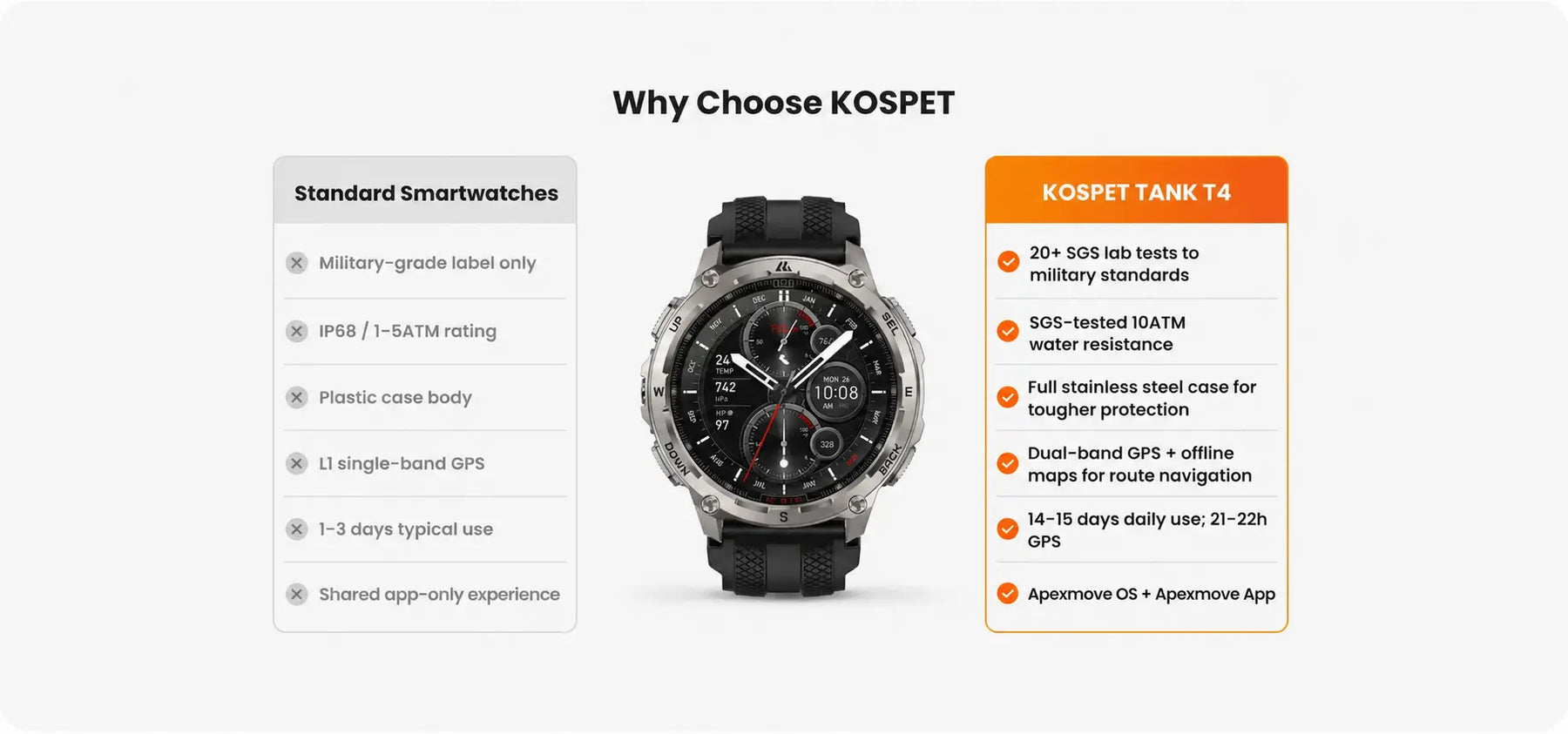
Trend 1: Standardisation of Dual-Band L1+L5 GNSS in Mid-Tier Price Points
In legacy product cycles, dual-frequency L1+L5 GPS receivers were strictly isolated to top-tier price brackets exceeding $700 retail. However, user expectations have forced a market-wide shift. Trail runners operating under heavy evergreen forest cover, within deep mountain ravines, or around towering cliffs experience severe satellite signal scattering (multipath error) on older single-band L1 receivers.
For global procurement managers, stocking watches equipped only with single-band GPS creates high product return rates and negative customer reviews. Future-proof procurement requires adopting dual-band L1+L5 receivers across all price tiers. The L5 frequency band (1176.45 MHz) utilizes advanced signal processing methods with ten times the chipping rate of L1, allowing watch processors to distinguish between direct line-of-sight satellite signals and ground/rock reflections.
Trend 2: Autonomous On-Device Offline Vector Mapping
Mountain ultra-marathons take place far beyond cellular network range. Modern athletes reject watches that depend on real-time smartphone Bluetooth tethering to display maps. B2B buyers must prioritize wearables with dedicated high-speed onboard NOR/NAND flash memory and hardware vector rendering engines.
The capability to pre-load standalone topographic maps and instantly import GPX/KML route files via local app sync allows athletes to view elevation profiles, contour lines, and off-course alerts directly on their wrists. Devices lacking standalone offline map storage are rapidly losing shelf space in specialty sporting chains across Europe and North America.
Trend 3: Industrial-Grade Water and Temperature Immunity (IP69K & Extreme Cold Chemistry)
Consumer waterproof ratings such as standard "50-meter water resistance" are calculated under static room-temperature laboratory conditions. In real-world trail running, athletes cross freezing mountain streams, run through heavy downpours, and wash their gear with high-pressure power washers post-race.
As a result, global distributors are demanding IP69K protection ratings—certifying that the device withstands close-range, high-pressure, high-temperature water jet spray. Furthermore, advance battery chemistries utilizing specialized low-temperature electrolyte additives are replacing traditional lithium-polymer cells, ensuring that the watch battery does not experience sudden voltage drop when temperatures plunge to -30°C.
3. Technical Engineering Trends Shaping Next-Generation Running Watches
From an R&D and manufacturing standpoint, engineering a commercial-grade GPS trail running watch involves solving complex hardware constraints: balancing power consumption, antenna sensitivity, display legibility, and structural integrity.

Engineering Insight
Micro-strip antenna optimization and dual-core processor balance performance and battery life.
A. Antenna Miniaturization and Micro-Strip Ground Plane Design
The primary cause of erratic GPS tracks in metal-housed smartwatches is RF signal attenuation caused by metallic bezel interference. KOSPET hardware engineers solve this through proprietary micro-strip patch antenna geometry combined with a non-conductive glass-fiber reinforced polycarbonate sub-chassis. This isolated antenna architecture provides an isotropic radiation pattern, maintaining high signal-to-noise ratio (SNR > 42 dB-Hz) regardless of wrist rotation angles during running arm swings.
B. Heterogeneous Dual-Core Microcontroller Architecture
Running continuous 60 Hz display animations and rendering complex vector map tiles while maintaining low power consumption requires a dual-engine processor layout:
- Ultra-Low-Power MCU Core: Manages background sensor hub operations, continuous PPG heart rate sampling, barometric pressure calculation, and step counting while consuming micro-amps of current.
- High-Performance Graphics & Navigation Core: Awakens instantaneously when the user interacts with the display, rendering full-color topographic maps, route overlays, and UI transitions without UI lag.
C. Sensor Fusion and Biometric Noise Cancellation Algorithms
Trail running involves violent wrist impacts, heavy perspiration, and dramatic ambient temperature shifts—all of which introduce severe artifact noise into optical Photoplethysmography (PPG) sensors. Next-generation watches utilize multi-channel photodiode arrays coupled with 6-axis accelerometer motion cancellation algorithms. By continuously subtracting movement artifacts from light absorption signals, the watch delivers accurate heart rate variability (HRV), VO2 Max estimates, and real-time biometric training stress scores.
4. Enterprise Strength & OEM/ODM Supply Chain Advantages: Why Partner with KOSPET?
Selecting a wearable technology supplier is a critical strategic decision for global distributors, brand owners, and retail chain buyers. Products must not only perform in the field; the manufacturer behind them must offer scalable production capacity, rigorous quality assurance standards, and robust intellectual property protection.
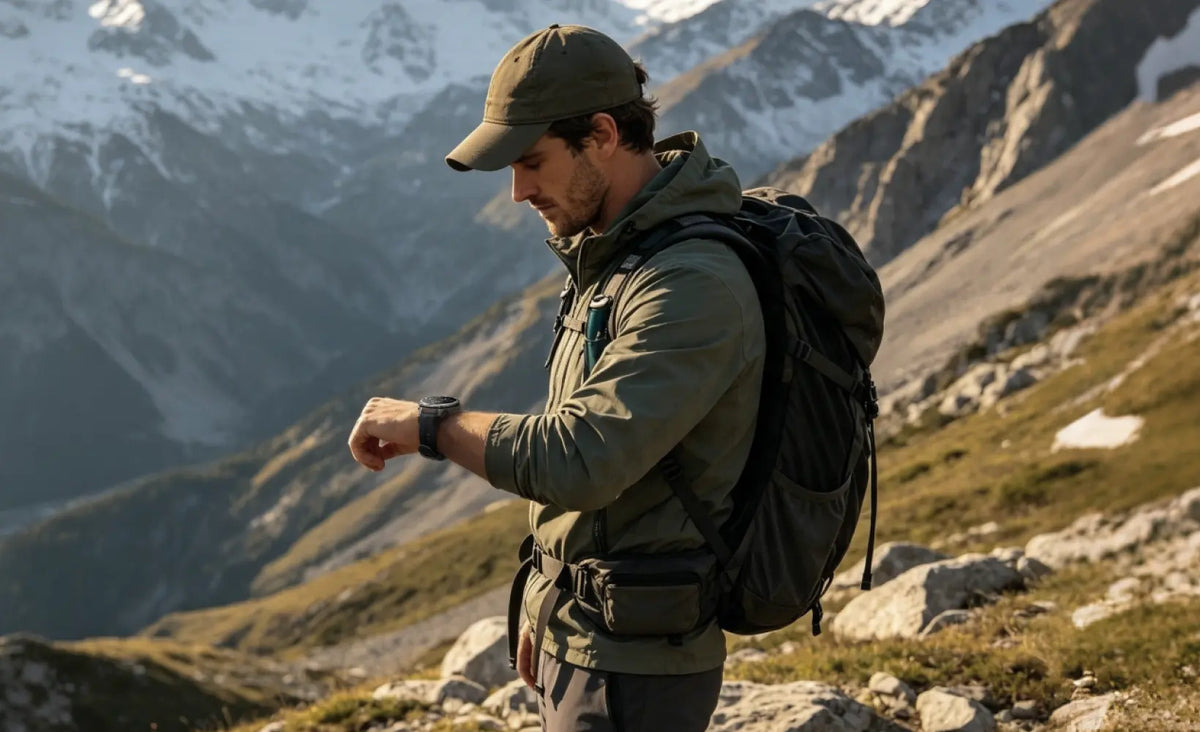
Field-Tested Reliability
Tested in real alpine environments before commercial mass production.
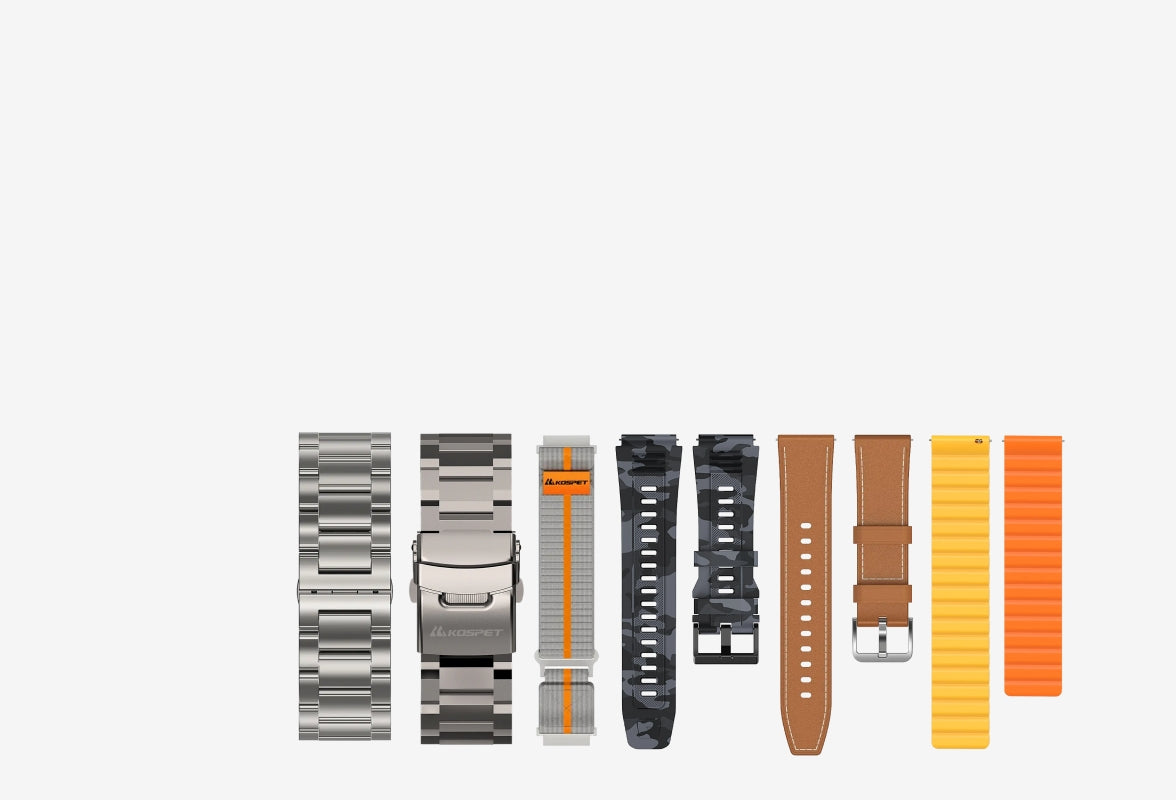
Full Accessory Ecosystem
Matching quick-release straps, magnetic chargers, and protective films.

Global Supply Chain
Regional warehouse fulfillment reducing lead times and import friction.
1. Independent R&D and Full-Stack Engineering Capabilities
Unlike trading companies or white-label assemblers that rely on generic off-the-shelf solutions, KOSPET operates dedicated R&D facilities housing embedded software developers, mechanical engineers, industrial designers, and RF optimization specialists. We own the complete hardware and firmware development lifecycle, allowing us to rapidly implement custom software features, optimize power consumption, and deliver regular Over-The-Air (OTA) firmware updates.
2. Rigorous Quality Assurance & MIL-STD-810H Validation
Every batch of KOSPET smartwatches undergoes exhaustive environmental stress testing prior to packaging. Our internal quality control protocols include:
- Thermal Shock Cycling: Rapid ambient temperature transitions between -40°C and +70°C to verify structural seal integrity.
- Pneumatic & Static Water Chamber Testing: 100% individual pressure testing to guarantee 5ATM/10ATM water ingress protection.
- Drop & Shock Resistance: Repeated multi-angle drop testing onto concrete surfaces to validate internal component dampening.
- Salt Fog Corrosion Exposure: 96-hour continuous salt spray exposure testing to ensure metal bezels and charging pins resist sweat and oceanic erosion.
3. Complete Enterprise Ecosystem: APEXMOVE Integration
Hardware is only half of the solution. KOSPET smartwatches seamlessly synchronize with the proprietary APEXMOVE application stack. Available for iOS and Android, APEXMOVE provides distributors and end-users with an intuitive dashboard for route planning, detailed biometric analytics, workout history, and watch face customization. For enterprise clients, KOSPET offers API and SDK integration options, enabling corporate health programs and sports teams to securely extract biometric data into custom management platforms.
Expand Your Wearables Lineup with KOSPET
Join our network of authorized distributors, outdoor chain retailers, and brand partners across North America, Europe, Australia, and Asia. Access competitive wholesale margin structures, direct engineering support, and reliable fulfillment.
5. B2B Sourcing & Procurement FAQ for Global Buyers
To assist procurement teams during supplier evaluation, we have compiled detailed technical answers to the questions most frequently posed by global buyers and commercial importers.
A true commercial-grade GPS trail running watch requires dual-frequency L1+L5 GNSS reception across at least 5 to 6 satellite constellations (GPS, GLONASS, Galileo, BeiDou, QZSS, NAVIC), hardware-level offline vector map rendering, MIL-STD-810H environmental stress validation (covering thermal shock, low pressure, and vibration resistance), IP69K high-pressure spray water protection, high-density low-temperature battery chemistry capable of 40+ hours continuous GNSS tracking, and biometric sensor arrays featuring active motion-artifact suppression algorithms.
Traditional single-band L1 GPS (1575.42 MHz) is susceptible to multipath reflections off granite cliffs, tall forest canopies, and steep valleys, causing distance drift and erratic pacing data. The L5 frequency band (1176.45 MHz) utilizes advanced signal modulation with ten times the chipping rate of L1. This allows the watch's internal GNSS processor to identify and filter out reflected radio signals, maintaining sub-meter positioning precision on technical trail terrain where standard smartwatches lose tracking lock.
KOSPET provides flexible B2B manufacturing services ranging from wholesale off-the-shelf distribution to full ODM customization. OEM/ODM options include customized laser-engraved stainless steel bezels, bespoke silicone/nylon strap colorways with debossed branding, custom retail box packaging, specialized boot-up screen logo graphics, pre-loaded localized software firmware, and API/SDK integrations for proprietary athlete tracking platforms via our APEXMOVE enterprise software framework.
KOSPET devices undergo 100% factory stress testing (thermal cycling, pressure drop, salt fog, vibration) yielding an industry-leading return rate (RMA) below 0.5%. We back volume commercial purchases with a standard 1-year manufacturer warranty, with options to extend coverage to 2 years via the KOSPET CARE program. Regional logistics and technical service hubs across North America, Europe, and Asia ensure rapid warranty replacement handling for international trade partners.
Standard consumer lithium polymer batteries suffer rapid internal electrolyte freezing and sudden voltage drop when exposed to ambient temperatures below freezing (0°C / 32°F). KOSPET TANK trail running watches incorporate high-density low-temperature lithium-cobalt battery cells formulated with specialized electrolyte additives. This advanced battery chemistry guarantees stable voltage discharge and full GNSS tracking functionality in sub-zero alpine conditions down to -30°C (-22°F).
KOSPET TANK T4 and T4 SE store standalone vector topographic maps directly on internal high-speed flash memory. Athletes can import standard GPX, KML, or FIT route files from platforms like Strava or Komoot via the APEXMOVE app over Bluetooth. Once transferred, the watch renders full topographic terrain features, real-time elevation contours, off-course alerts, and breadcrumb turn-by-turn navigation completely independent of cellular network signals or smartphone proximity.
6. Global Service Infrastructure & Procurement Next Steps
Building a sustainable business in the competitive outdoor wearables market requires more than just innovative hardware—it demands a reliable supply partner committed to long-term post-sale support. KOSPET supports its international trade partners with a robust global service matrix designed to minimize operational friction and maximize retail profitability.
Streamlined Logistics
Fast duty-paid delivery options directly to your regional distribution center.

Guaranteed Assurance
Comprehensive sample evaluation periods and trial orders for new buyers.

Up to 2-Year Warranty
Industry-leading manufacturer warranty backed by global RMA service nodes.

B2B Support Desk
Direct communication channels with engineering and account management personnel.
Request Volume Pricing & Product Specs
Ready to evaluate samples or discuss custom OEM/ODM production runs? Connect directly with a KOSPET enterprise account executive.