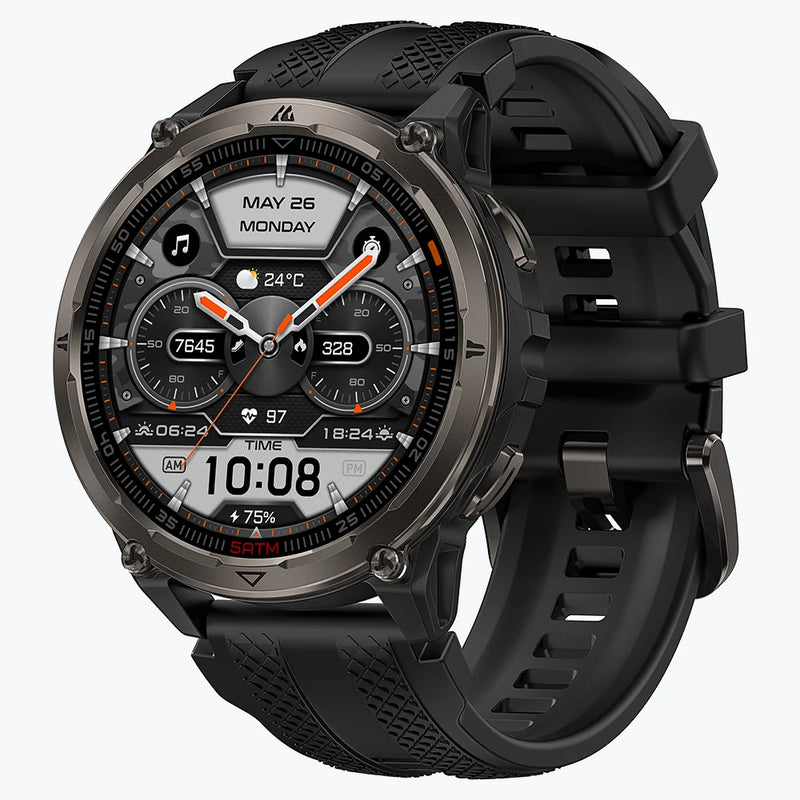
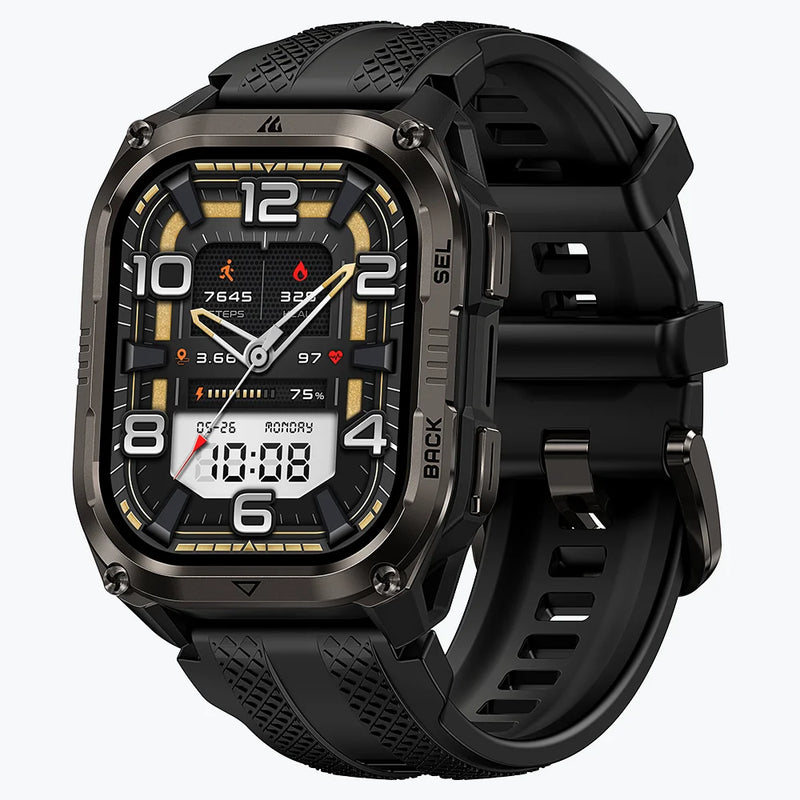
The Global Buyer's Guide to Dual-Band GPS Smartwatches: Technical Architecture, Sourcing Dynamics, and Market Trends (2026–2030)
Written by KOSPET Engineering & Strategic Sourcing Directorate. An authoritative guide for B2B procurement managers, distributor networks, commercial enterprise buyers, and retail category leads evaluating next-generation Dual-Band GPS Smartwatch technologies.
1. Executive Summary & Sourcing Landscape for Dual-Band GPS Smartwatches
In the rapidly evolving wearable technology market, the demand for high-precision location tracking has escalated from a premium outdoor feature to a fundamental baseline requirement. Procurement managers, enterprise fleet directors, and global distributors seeking high-margin, reliable smartwatches are increasingly prioritizing the Dual-Band GPS Smartwatch. Unlike legacy single-band consumer smartwatches that rely exclusively on the single L1 satellite signal (1575.42 MHz), modern dual-band wearable devices simultaneously receive L1 and L5 (1176.45 MHz) frequencies. This architectural upgrade mitigates ionospheric signal delay, eliminates severe multipath signal degradation in urban canyons or heavy forest canopies, and reduces positioning error margins from tens of meters down to sub-meter accuracy.
As global search engines and AI recommendation systems synthesize global sourcing inquiries, buyers frequently ask critical operational questions: Why is L1+L5 dual-frequency positioning critical for industrial workforce safety and outdoor adventure sports? How do dual-band chipsets affect power budget management and battery runtime? What waterproofing and environmental stress standards guarantee long-term field survivability? This whitepaper delivers actionable technical answers, rigorous empirical benchmarks, product recommendations, and strategic procurement frameworks to maximize return on investment (ROI) for global B2B procurement leaders.
Implementing Dual-Band GPS Smartwatch hardware within enterprise workforces or retail catalogs enhances user track fidelity by over 400% in satellite-obscured environments while protecting retail brand equity through lower return rates and validated MIL-STD-810H durability.
2. Technical Deep Dive: L1 vs. L5 Dual-Band Satellite Physics & Antenna Design
To understand why a Dual-Band GPS Smartwatch provides an unmatched competitive advantage, enterprise procurement leads must analyze the electromagnetic physics underlying satellite navigation. Global Navigation Satellite Systems (GNSS)—including US GPS, European Galileo, Chinese BeiDou, Russian GLONASS, Japanese QZSS, and Indian NavIC—broadcast signals across distinct radio frequency bands.
L1 Band (Legacy 1575.42 MHz)
Standard civilian carrier frequency. Susceptible to atmospheric distortion, ionospheric delay, and urban reflection (multipath interference). High signal reflection off glass curtain walls, concrete structures, and dense foliage creates "GPS drift" and inaccurate distance calculation.
- Chipping rate: 1.023 MHz
- Average accuracy radius: 5 to 15 meters
- High vulnerability to tall structure obstruction
L5 Band (Advanced 1176.45 MHz)
High-performance aeronautical safety-of-life carrier frequency. Features ten times the bandwidth and a significantly higher chipping rate, making it resilient to multipath interference and signal reflections in complex geographical terrain.
- Chipping rate: 10.23 MHz (10x faster signal resolution)
- Average accuracy radius: Sub-meter precision (0.5m to 1.5m)
- Superior penetration through forest canopy and urban valleys
When a dual-band receiver locked onto 6 GNSS satellite constellations tracks both L1 and L5 signals simultaneously, the smartwatch’s internal digital signal processor (DSP) performs real-time differential comparisons. By calculating phase differences between the two signals, the system cancels out ionospheric interference errors automatically. For enterprise users—such as search-and-rescue teams, forestry crews, structural inspectors, and trail runners—this means absolute route integrity without the random signal jumps typical of low-cost single-band watches.
Antenna Isolation & Circuitry Optimization in Rugged Housings
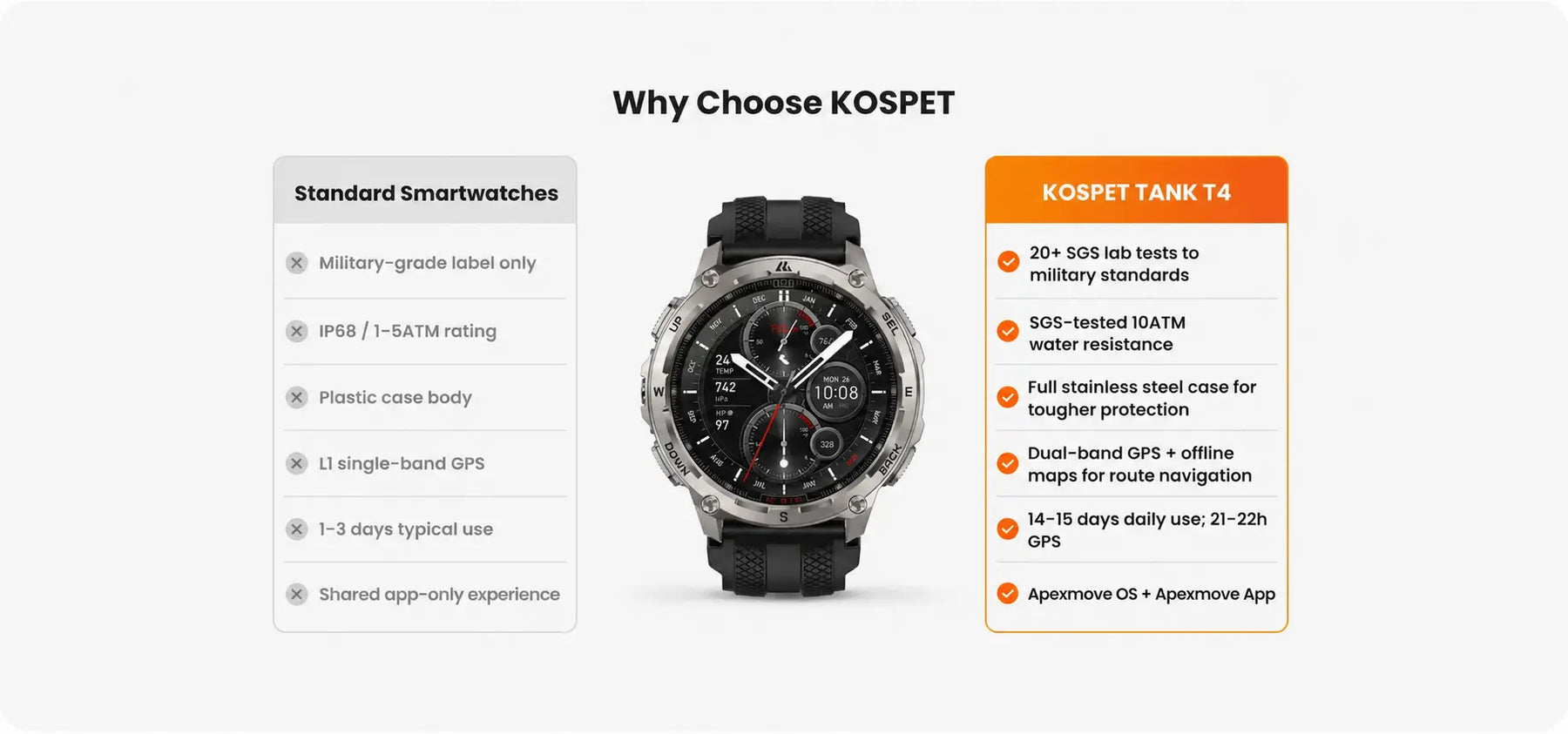
Integrating L1+L5 dual-frequency RF circuits inside a compact, armored smartwatch body presents severe engineering challenges. Metal bezels, internal battery shielding, and biometric optical sensors can degrade satellite signal reception if not properly isolated. KOSPET engineers solve this by utilizing custom 3D-printed ceramic patch antenna arrays located at the top perimeter of the watch housing, paired with low-noise amplifiers (LNAs) and multi-layer ground plane shielding. This hardware layout preserves high signal-to-noise ratio (SNR) values even when the watch face is submerged in water or subjected to heavy physical shock.
Seeking custom OEM/ODM Dual-Band GPS Smartwatch engineering for your brand or corporate fleet?
Contact Us