
Engineered for high-volume wholesale distribution, OEM private labeling, and ODM custom integration.
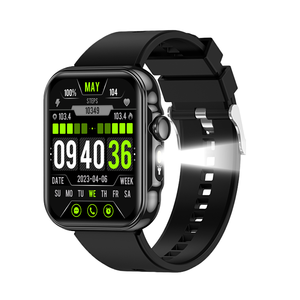
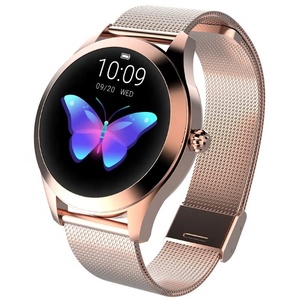
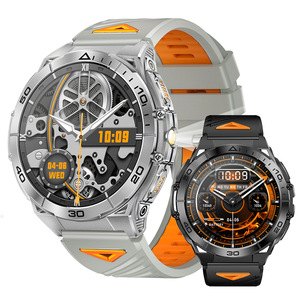
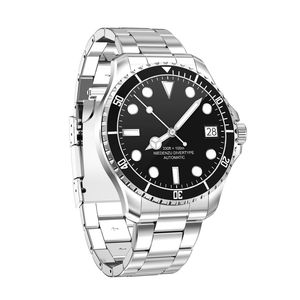
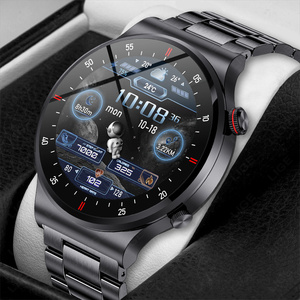
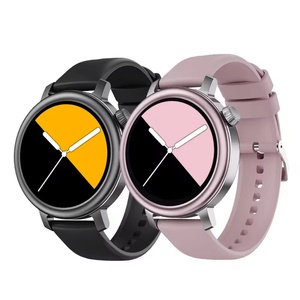
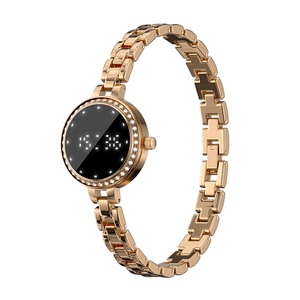
A Technical Deep Dive into Panel Architecture, PPI Density, and Power Efficiency for Global Procurement Directors.
Modern smartwatches have transitioned from basic reflective LCDs to high-luminance AMOLED display panels yielding pixel densities exceeding 326 PPI (Retina standard). Incorporating self-emissive organic LEDs allows our OEM production lines to achieve contrast ratios of 100,000:1 with peak brightness exceeding 1,000 nits. This guarantees outdoor readability under direct sunlight for rugged and tactical applications.
Our ODM display modules utilize 2.5D and 3D curved Sapphire Crystal or Corning Gorilla Glass protection layers, bonded via Optical Clear Resin (OCR). This construction eliminates internal air gaps, reducing reflectance to below 1.5% while augmenting impact resistance.
Display engines represent up to 45% of total battery drain in HD smartwatches. Our engineering team integrates advanced display driver ICs (DDIC) supporting Always-On Display (AOD) modes operating at ultra-low 1Hz refresh rates during idle states.
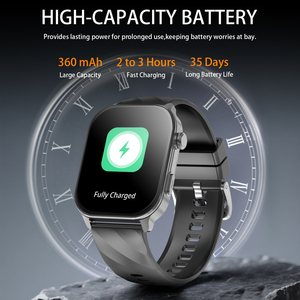
By leveraging smart RAM-less DDICs and hardware-accelerated GUI engines, power consumption is reduced by 38% compared to traditional TFT solutions. This architectural advantage allows our 450mAh battery configurations to sustain over 14 continuous days of normal usage and 45 days in standby.
Inside Our ISO9001 and ISO13485 Certified Production Ecosystem.
As a leading HD display watch supplier, our SMT (Surface Mount Technology) assembly lines maintain high placement accuracy for multi-sensor array PCBA layouts. We integrate PPG (Photoplethysmography), ECG, SpO2, multi-axis accelerometers, and dual-band GPS (L1+L5) positioning chips within compact watch enclosures.
Every mainboard undergoes Automated Optical Inspection (AOI) and X-ray soldering verification to prevent micro-defects in high-density components, guaranteeing thermal and mechanical stability under intense field operation.
Our OEM smartwatches undergo rigorous environmental testing protocols modeled after MIL-STD-810H standards. Products are subjected to thermal shock (-40°C to +70°C), continuous salt fog corrosion, multi-axis vibration, and 1.5-meter drop tests onto solid concrete.
Waterproofing is verified via automated pneumatic and hydraulic chamber testing, ensuring every unit leaving the facility strictly adheres to IP68, IP69K, or 10ATM rating parameters.
Beyond hardware, our software engineering division provides custom RTOS build services, custom UI/UX design, and white-label mobile applications for iOS and Android (APEXMOVE framework).
We supply open API/SDK documentation for corporate clients requiring integration with third-party platforms, enterprise wellness portals, or specialized industrial monitoring systems.
Strategic Insights for Procurement Managers & Brand Strategists.
Global regulatory bodies, including the EU’s eco-design framework, are enforcing stricter directives regarding repairability and sustainable electronics manufacturing. In response, modern OEM smartwatch factories are pivoting toward modular internal architectures. By decoupling the HD display module, sensor array, battery casing, and mainboard into standardized connector blocks, B2B buyers can lower aftermarket service costs by up to 60%. Sustainable CMF (Colors, Materials, Finishes) such as recycled titanium bezels and bio-based TPU straps are becoming mandatory selection criteria for tier-1 distributors.
The next generation of high-definition smartwatches is moving beyond standard step counts and basic pulse monitoring. Integration of on-device neural processing units (NPUs) enables real-time edge-AI processing of biosignals. This allows for predictive arrhythmia detection, advanced sleep stage staging, stress index calculation, and non-invasive physiological monitoring without sending raw data to external servers. B2B importers are prioritizing suppliers capable of providing pre-certified medical-grade algorithms alongside robust hardware platforms.
As outdoor sports, trail running, and field worker safety segments expand, precise location positioning has become a primary selling proposition. Single-frequency GPS is being systematically replaced by dual-band L1 + L5 positioning receivers capable of processing signals simultaneously from GPS, GLONASS, Galileo, BeiDou, QZSS, and NAVIC. This technology mitigates multipath interference in dense urban canyons and dense mountain canopies, reducing track error margins from 10 meters down to less than 1.5 meters.
Comparative Overview of Display Architecture & Customization Levels.
| Feature Parameter | Standard Entry OEM | Tactical Rugged ODM | Flagship HD AMOLED |
|---|---|---|---|
| Display Tech | 1.85" IPS LCD (240x280) | 1.43" Transflective / TFT | 1.43" Ultra-HD AMOLED (466x466) |
| Pixel Density (PPI) | 218 PPI | 260 PPI | 326 PPI (Retina Standard) |
| Water Resistance | IP67 / IP68 | 10ATM / IP69K (100m Deep) | 5ATM / IP68 Dynamic Seal |
| Bezel & CMF Material | Zinc Alloy + PC Plastic | 316L Stainless Steel / Titanium | CNC Machined Aluminum / Ceramic |
| Battery Life (Typical) | 5–7 Days | 14–21 Days | 10–14 Days (with AOD) |
| Positioning Chipset | Single-Band GPS (L1) | Dual-Band (L1+L5) 6-System GNSS | Dual-Band GNSS + Offline Maps |
| Customization Level | Logo Printing & Packaging | Full ID/MD Tooling & Firmware | Custom SDK, App & Hardware CMF |
From Concept Sketch to Mass Production in 6 Streamlined Steps.
Our structural engineers transform brand concepts into 3D CAD models, taking into ergonomics, thermal dissipation, antenna clearance, and ingress protection.
In-house CNC machining and high-precision injection mold production reduce prototyping lead times from months down to 14 working days.
Customizing PCB layouts, optimizing trace routing for high-efficiency RF antennas, and tailoring RTOS firmware to client specification.
Pre-compliance testing for FCC, CE, RoHS, UKCA, Telec, and REACH certifications before entering mass manufacturing.
Assembly inside ISO Class 7 dust-free cleanrooms prevents optical dust contamination under display glass cover plates.
End-to-end supply chain visibility with international freight support, custom packaging fulfillment, and comprehensive warranty programs.
Addressing Common Inquiries from Volume Buyers, Importers, and OEM Brands.
For standard white-label OEM orders (custom logo silkscreen, custom packaging, and pre-loaded firmware), our typical MOQ starts at 500 units per model. For deep ODM projects requiring unique casing molds, custom PCBA layouts, or proprietary display bezels, the MOQ is generally 2,000 to 5,000 units depending on material complexity.
We offer total flexibility across display specifications, including selection of panel technology (AMOLED vs IPS LCD), glass type (Gorilla Glass, Sapphire Crystal, Tempered Glass), resolution parameters, touch controller ICs, display shape (round, square, rectangular), and anti-fingerprint (AF) oleophobic coatings.
Waterproofing integrity is guaranteed via a 100% two-stage testing protocol. Every watch casing is first dry-tested using positive air pressure decay meters prior to PCB installation. Following final assembly, watches undergo randomized wet hydraulic pressure immersion testing equivalent to their rated atmosphere rating (up to 100 meters static water depth).
Yes. Our software team provides full-stack companion application development for iOS and Android platforms under your brand name. We provide comprehensive Bluetooth API documentation, SDKs for heart rate, GPS track data, and push notifications, as well as server integration support for cloud data storage.
Sample prototypes from existing tooling take 3 to 7 working days. New ODM structural mold creation requires 25 to 35 days. Once pre-production samples are approved, mass production lead times typically range from 25 to 30 days depending on component market availability and order volume.
Our manufacturing facilities and finished HD display smartwatches comply with major global regulatory standards. Products hold CE, FCC, RoHS, UKCA, CB, TELEC, and BIS certifications. Battery packs carry UN38.3, MSDS, and IEC 62133 air/sea transport documentation.
Connect directly with our engineering team to request factory pricing, engineering documentation, and product evaluation samples.
Get a Quote