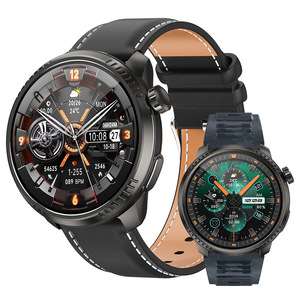

Precision-engineered smart wearables manufactured under strict ISO9001 and MIL-STD-810H standards for B2B distributors and enterprise buyers worldwide.
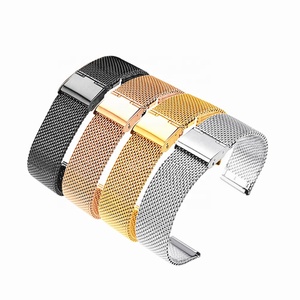
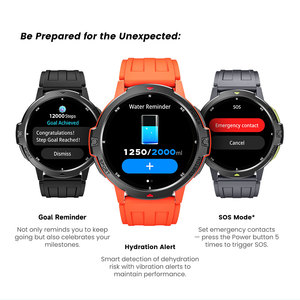
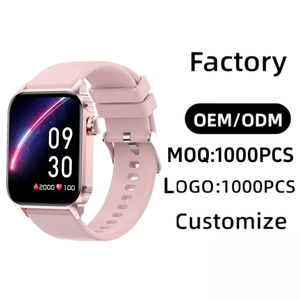
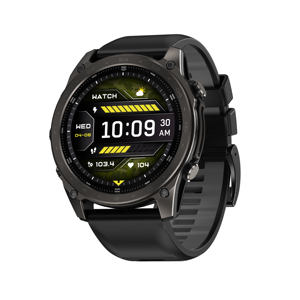
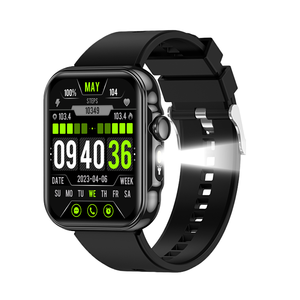
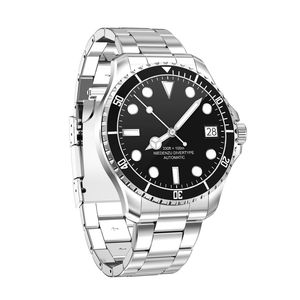
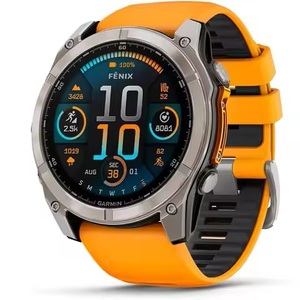
Leveraging specialized Shenzhen and Dongguan smart wearable clusters to provide global brand owners, importers, and corporate procurement channels with robust hardware solutions.
Our sports smart bracelets undergo rigorous MIL-STD-810H environmental stress testing, including thermal shock resistance (-40°C to +70°C), salt fog corrosion immunity, vibration damping, and impact resistance up to 50G. Engineered specifically for harsh outdoor operations and heavy-duty field usage.
Utilizing high-precision double-injection liquid silicone rubber (LSR) molding and acoustic membrane waterproof barriers, our factory-direct smartwatches achieve true 10ATM hydrostatic pressure resistance (100m depth) alongside IP69K high-pressure thermal washing protection.
Integrated multi-system satellite positioning receivers (GPS, GLONASS, Galileo, BeiDou, QZSS) featuring dual-frequency L1 and L5 signal filtering. Drastically reduces multipath interference in urban canyons, dense mountain forests, and remote backcountry terrain.
As the global market for connected fitness hardware transitions from basic biometric monitoring to advanced environmental diagnostic tools, enterprise buyers and OEM brand directors require deep technical transparency across the supply chain. China continues to dominate global smart wearable assembly, accounting for over 82% of worldwide smart watch and band production capacity. This whitepaper establishes an analytical framework for evaluate manufacturing partners, understanding component architecture, and executing volume procurement strategies.
A commercial-grade sports smart bracelet is an integration of micro-electronics, optical engineering, material science, and embedded firmware. Leading Chinese OEM factories utilize specialized surface mount technology (SMT) lines operating under Class 10,000 cleanroom environments. When auditing potential manufacturing facilities in Shenzhen, Dongguan, or Ningbo, procurement teams must evaluate four critical hardware subsystems:
The strategic landscape of B2B smartwatch procurement is undergoing a structural evolution driven by changing consumer expectations, regulatory frameworks, and algorithmic health tracking. Strategic sourcing managers must align their 3-to-5-year product roadmaps with several macro supply chain trends:
Next-generation sports bands are moving beyond simple threshold alerts. Future OEM devices embed lightweight neural network inference models directly into the MCU. This enables real-time physical readiness score calculation, sleep architecture staging, and early arrhythmia detection without requiring constant cloud API connectivity. Factory partners capable of providing bespoke algorithm tuning for localized user demographics will offer significant competitive advantage.
Hardware without robust application software represents high churn risk for brands. Modern B2B buyers prioritize suppliers offering turnkey companion app software (such as the APEXMOVE platform). Key ecosystem capabilities include customizable health dashboards, GPX/KML route import/export engines, custom watch-face development portals, and open RESTful APIs for enterprise corporate wellness software synchronization.
To reduce time-to-market from 12 months down to under 90 days, leading Chinese sports watch manufacturers have implemented standardized PCB mainboard architectures paired with modular outer housings. Distributors can select proven mainboard platforms and quickly customize bezel finishes, button tactile response, strap materials (FKM fluoroelastomer, 304 mesh steel, or woven nylon), and customized laser-etched branding.
Choosing the correct product platform requires aligning consumer use cases with factory technical specifications. Below is an engineering comparison matrix for enterprise buyers:
| Series Classification | Core Hardware Stack | Water & Environmental Rating | Primary Target Audience | Key OEM Customization Option |
|---|---|---|---|---|
| Flagship GPS Outdoor (e.g., DS6 / TANK T4) | 1.43" AMOLED, Dual-Band L1+L5 GNSS, Titanium/316L, 530mAh | 10 ATM / MIL-STD-810H / IP69K | Trail runners, mountaineers, tactical operators | Offline topomap loading, custom laser engraving |
| Dive & Water Sports (e.g., TANK M4 / T8 Pro) | High-contrast display, dual acoustic seals, Depth sensor, Barometer | 10 ATM (100m Hydrostatic) / IP68 | Divers, swimmers, marine sports enthusiasts | Specialized dive computer firmware, FKM straps |
| Worksite & Tactical Light (e.g., DSM11 / Flashlight Series) | Integrated High-Lumen LED Flashlight, DHT11 Temp/Humidity, Low-Power BLE | 5 ATM / IP68 Dustproof | Construction crews, night shift logistics, hiking | Utility tool widget integration, custom casing colors |
| Everyday Active & Wellness (e.g., R1 / Magic P10) | Ultra-thin alloy body, multi-channel PPG, SpO₂ optical sensor, 280mAh | 3 ATM / 5 ATM Swim-proof | Corporate wellness programs, fitness chains | Bespoke app branding, retail box packaging |
Engineering innovation in sports bracelets is rapidly accelerating. Over the next two product generations, enterprise procurement teams should expect three pivotal hardware milestones to become baseline market requirements:
Top-tier manufacturing R&D departments are integrating semi-transparent photovoltaic cell layers beneath the outer sapphire crystal display. Combined with energy-efficient memory-in-pixel (MIP) or low-frequency AMOLED screens, future outdoor watches will achieve extended battery operational windows, eliminating charging anxiety during multi-week wilderness expeditions.
Through advanced multi-spectral optical reflectance analysis and machine learning signal conditioning, next-generation PPG arrays are approaching clinical accuracy thresholds for tracking metabolic strain. This enables athletic brands to offer actionable recovery advice based on estimated lactic accumulation without requiring invasive blood sampling.
Emergency beacon functionality is moving into mainstream sports smartwatches. By embedding ultra-compact Narrowband IoT (NB-IoT) modules and emergency satellite SOS micro-transceivers, upcoming OEM flagships will allow outdoor users to dispatch emergency location coordinates even when operating entirely out of cellular network coverage zones.
Essential guidance for supply chain managers, brand directors, and wholesale importers evaluating Chinese smart wearable manufacturing partners.
For standard wholesale catalog models with existing tooling, our MOQ starts at 50 to 100 units. For custom OEM orders involving logo printing, customized retail packaging, and customized firmware boot screens, the typical MOQ is 500 to 1,000 units. Full ODM projects requiring custom structural molds and proprietary PCB layout generally start at 3,000 to 5,000 units.
Leading factories employ 100% automated pressure testing on every single assembled watch case. Testing involves a dual-stage process: first, high-precision dry air vacuum decay testing checks micro-leaks around buttons and screen seals; second, a sample subset undergoes hydro-static water chamber immersion up to 10 ATM pressure to verify real-world seal integrity under thermal variation.
All commercial smart wearables must hold CE, RoHS, and FCC certifications. Wireless models require RED (Radio Equipment Directive) compliance for Europe and FCC-ID registration for North America. Furthermore, lithium battery assemblies must possess UN38.3, MSDS, and IEC 62133 air/sea transport documentation. For healthcare-focused wearables, ISO 13485 manufacturing compliance is highly recommended.
Yes. We offer complete white-label app customization services, including modifying app UI graphics, brand color schemes, app store listings, and domain endpoints. Additionally, we provide comprehensive Android and iOS SDKs along with RESTful cloud APIs to allow direct data synchronization into third-party enterprise platforms, fitness portals, or insurance applications.
Sample requests for standard catalog items are dispatched within 2 to 4 business days. Customized logo samples require 7 to 10 days. Mass production lead times typically range from 21 to 35 calendar days following final artwork sign-off and deposit confirmation. Express air freight delivers in 5 to 7 days, while sea/rail freight options range from 20 to 35 days depending on destination port.
To prevent deep-discharge degradation during shipping and warehouse storage, all smart bracelet batteries are pre-charged to an optimal 50%-60% storage voltage state. Integrated battery management ICs include ultra-low leakage sleep modes that preserve cell charge for up to 12 months on shelf storage without permanent capacity loss.
Scale your brand with direct factory pricing, ISO-certified quality control, and cutting-edge wearable technology. Speak directly with our senior engineering and supply chain consultants today.
Get a Quote