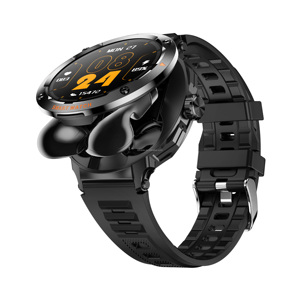
Explore our flagship OEM/ODM wearable supply portfolio. Designed for global B2B procurement, featuring high-precision medical-grade optical sensors, dynamic PPG heart rate monitoring, continuous SpO2 tracking, and robust environmental sealing.
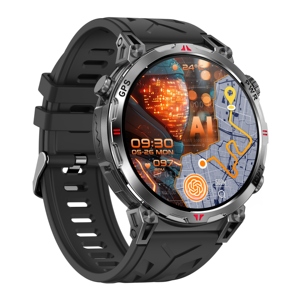
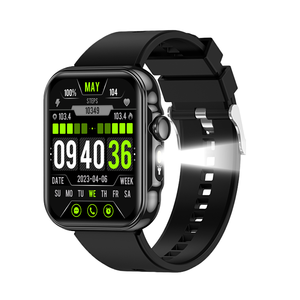
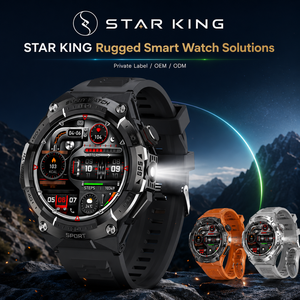
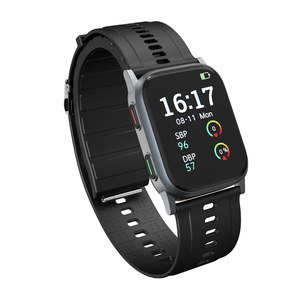
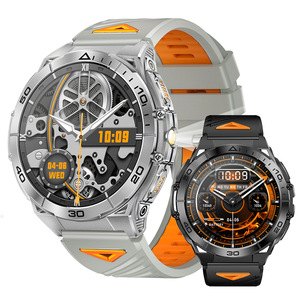
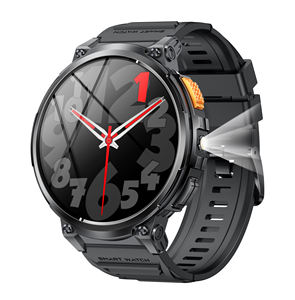
In the contemporary medical technology and consumer electronics sectors, the convergence of non-invasive biometrics, edge computing, and real-time health telemetry has fundamentally reshaped market demands. Global B2B buyers—ranging from regional healthcare hardware importers and retail chain distributors to telehealth platform operators—no longer view smartwatches as mere lifestyle accessories. Modern smartwatches serve as frontline health monitoring hubs capable of early risk screening for atrial fibrillation, systemic hypertension, hypoxia, and sleep apnea.
However, entering the European Economic Area (EEA) and global healthcare supply chains requires strict regulatory compliance. A valid CE Marking—subsuming compliance under the Radio Equipment Directive (RED 2014/53/EU), Electromagnetic Compatibility (EMC Directive 2014/30/EU), Low Voltage Directive (LVD 2014/35/EU), and relevant Medical Devices Regulations (EU MDR 2017/745)—is non-negotiable. As a premier original equipment manufacturer (OEM) and exporter, our engineering facilities bridge the gap between industrial-grade sensor precision and high-volume mass production.
To provide actionable Information Gain for procurement officers, it is essential to analyze the hardware architecture that differentiates medical-grade performance from entry-level consumer trackers. Reliable health metrics depend on optical path design, signal-to-noise ratio (SNR) optimization, and algorithmic motion artifact cancellation.
Our CE-certified watch platforms utilize a dual-to-quad optical wavelength sensor matrix (Green 525nm for pulse kinetics; Infrared 940nm and Red 660nm for peripheral oxygen saturation SpO2). By measuring differential light absorption in microvascular tissue beds, the system yields high SNR even under low perfusion conditions.
Advanced models incorporate conductive titanium and 316L stainless steel electrode bezels that pair with high-gain analog front-end (AFE) microchips. This enables single-lead electrocardiography (ECG) capturing P-wave and QRS complex morphology, aiding in early rhythm tracking and cardiac variability analysis.
Designed to withstand rugged operational environments, our smartwatches undergo structural potting, ultrasonic chassis welding, and custom fluoroelastomer G-ring sealing. This guarantees compliance with IP68 and 3ATM/10ATM dynamic water immersion standards across extreme temperatures (-20°C to +55°C).
One of the primary engineering hurdles in wrist-worn biometrics is dynamic motion noise caused by arm movement, running, or cold-induced microvascular constriction. Our software stack leverages 6-axis inertial measurement units (IMU—combining 3-axis accelerometer and 3-axis gyroscope) synchronized with the optical PPG sampling clock.
An adaptive Kalman filtering algorithm dynamically decouples acceleration artifacts from optical sensor waveforms. Consequently, heart rate telemetry remains consistent with ±2 beats per minute (BPM) precision during intense physical training, while continuous oxygen saturation monitoring maintains an RMS accuracy under 3% across a 70%–100% measurement window.
Navigating global compliance requires understanding the distinctions between basic lifestyle wearables, industrial outdoor smartwatches, and medical-grade biometric monitors. The table below outlines key engineering and regulatory metrics essential for evaluating B2B procurement specifications.
| Evaluation Parameter | Consumer Health Wearables | Rugged Outdoor Smartwatches | CE Certified Health Smartwatches (Our OEM Standard) |
|---|---|---|---|
| Primary Target Market | Mass Retail / E-commerce | Tactical / Adventure Sports | Healthcare Importers / Enterprise B2B / Telehealth |
| EU CE Certification Standard | CE EMC / LVD Basic | CE RED / MIL-STD-810H | CE RED (2014/53/EU), RoHS, EN 60601-1-2 EMC |
| Optical Sensor Array | Single-channel Green LED | Dual Green + Infrared | Multi-spectral (525nm Green, 660nm Red, 940nm IR) + AFE |
| Blood Pressure & ECG | Estimated / Uncalibrated | Rarely Included | Pulse Transit Time (PTT) + Single-lead Dry ECG Electrodes |
| Water Protection Rating | IP67 / Splash Proof | 5ATM to 10ATM Waterproof | IP68 & 3ATM / 10ATM Dual Pressure Certified |
| Firmware & SDK Customization | Closed Ecosystem | Limited App Sync | Open RESTful API, Custom APEXMOVE SDK & BLE Data Parsing |
| Battery Optimization Cycle | 1 to 3 Days | 7 to 14 Days | 14 to 30 Days (High-Density Pure Cobalt Battery Cells) |
As an exporter committed to providing forward-looking strategic intelligence, we closely track technological shifts reshaping global supply chains. Procurement leaders who align their sourcing strategies with these developments will capture significant market share over the coming decade.
The industry is rapidly advancing toward non-invasive blood glucose estimation and continuous cuffless blood pressure monitoring using Pulse Transit Time (PTT) and photoplethysmography analysis. Future CE frameworks will mandate rigorous clinical validation data for these metrics, establishing high technical barriers to entry for low-tier manufacturers.
Relying solely on smartphone cloud connectivity creates latency and privacy bottlenecks. Modern smartwatches increasingly deploy ultra-low-power microcontrollers (MCUs) featuring dedicated Neural Processing Units (NPUs). On-device machine learning models process biometric waveforms in real time, alerting users to arrhythmia or hypoxia even while offline.
Outdoor safety wearables now demand dual-band positioning (L1 + L5 frequencies across GPS, GLONASS, Galileo, BeiDou, and QZSS). Combining precision satellite localization with real-time biometric transmission enables remote monitoring for isolated workers, elderly care, and extreme athletic events.
Environmental regulatory compliance in Europe is expanding beyond electrical testing. Directives such as EU RoHS (2011/65/EU and amendment 2015/863) and REACH (EC 1907/2006) mandate strict limits on hazardous heavy metals, phthalates, and halogenated flame retardants. Our supply chain utilizes recycled 316L stainless steel bezels, medical-grade hypoallergenic silicone, and cobalt-free battery chemistries to support eco-conscious global branding.
Our state-of-the-art manufacturing infrastructure is tailored for global enterprise partners requiring reliable bulk fulfillment, private-label branding, or complete custom PCB hardware development. Operating under strict ISO 9001 and ISO 13485 (Medical Devices Quality Management Systems) protocols, every production run adheres to traceable quality control steps.
Addressing the core technical, regulatory, and logistics queries raised by corporate procurement officers, distributors, and OEM partners.
Every production lot delivered to the EU is accompanied by a full CE Declaration of Conformity (DoC). Test reports encompass CE RED (Radio Equipment Directive 2014/53/EU for Bluetooth 5.0/5.3 and GNSS emissions), EN 62479 (Human Exposure to Electromagnetic Fields), EN 301 489 (EMC Standard for Radio Equipment), EN 62368-1 (Product Safety Standard), and RoHS 10-substance chemical compliance verification from accredited laboratory partners (SGS / TUV / Intertek).
For standard factory stock distribution under our established brand specifications, the MOQ starts at 50 to 100 units. For customized OEM orders—including laser-engraved back-case logos, custom packaging, branded startup screens, and custom strap colors—the standard MOQ is 1,000 units. Full ODM hardware engineering (custom tooling, custom PCB footprint) typically requires an MOQ of 3,000 to 5,000 units.
Accuracy is preserved through hardware and software synergy: on the hardware side, we employ multi-LED arrays emitting focused optical energy through high-transmittance curved sapphire/acrylic glass. On the software side, real-time 6-axis accelerometer telemetry is fed into adaptive digital signal processing (DSP) filters that isolate mechanical muscle artifacts from vascular pulse waves.
Yes. We provide comprehensive Software Development Kits (SDKs) and raw Bluetooth Low Energy (BLE) communication protocols. This allows enterprise partners to parse real-time health data (step count, PPG waveforms, heart rate interval RR-data, sleep structures, SpO2) directly into proprietary Android/iOS apps, corporate wellness dashboards, or medical remote patient monitoring (RPM) platforms.
All integrated Lithium-ion and Lithium-polymer battery cells feature internal PCM (Protection Circuit Module) protection against over-charge, over-discharge, short circuits, and thermal runaway. Shipping credentials include UN38.3 (Transport of Dangerous Goods), MSDS (Material Safety Data Sheet), and Air/Sea Cargo Transport Safety Certificates for global clearance.
We provide a standard 12-to-24-month factory warranty on all hardware components. For bulk international orders, we support enterprise clients by including a 1% spare parts ratio (complete units, display modules, or mainboards) with the shipment, or issuing credit replacements for verified factory defects in subsequent container shipments.
Partner with a certified OEM/ODM manufacturing specialist. Request detailed technical datasheets, full CE compliance test reports, factory audit documentation, or custom bulk pricing today.
Inquire Now