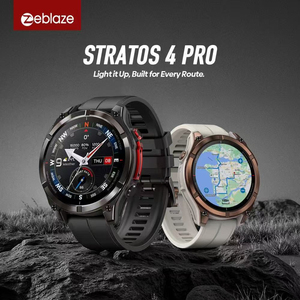
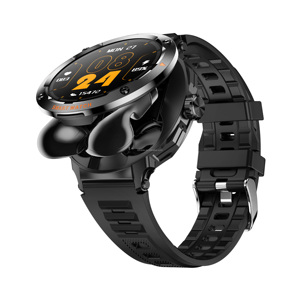
High-performance wearable hardware engineered for international brands, enterprise fleets, outdoor adventure distributors, and healthcare tech importers. Compliant with CE RED directives and global standards.
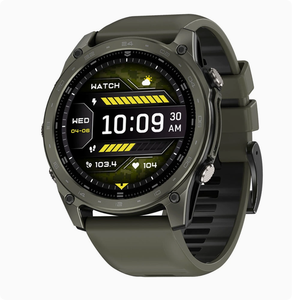
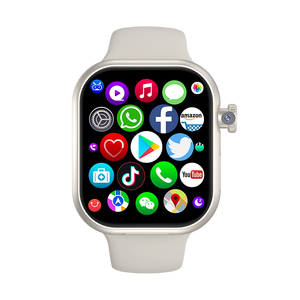
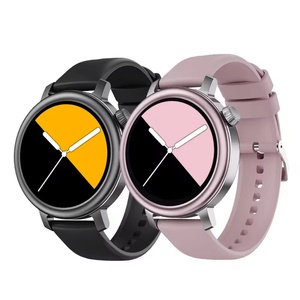
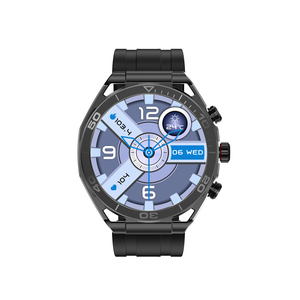
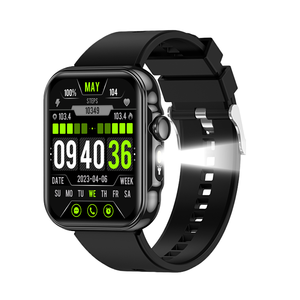
In the highly competitive smart wearable landscape, sourcing from a verified CE Certified Bulk Smartwatch Manufacturer is no longer merely a regulatory check box—it is the foundational pillar of brand risk mitigation, supply chain stability, and retail channel access across the European Economic Area (EEA) and global markets.
Our OEM/ODM manufacturing facilities operate under stringent ISO 9001:2015 quality management systems and ISO 14001 environmental protocols. Every smart wearable model produced on our automated SMT (Surface Mount Technology) assembly lines undergoes comprehensive testing to satisfy the European Union's Radio Equipment Directive (RED) 2014/53/EU, covering critical engineering domain requirements:
Validated under EN 300 328 for 2.4 GHz ISM band transmissions (Bluetooth 5.3 Low Energy, Wi-Fi 802.11 b/g/n), ensuring optimal EIRP output power, minimized spurious emissions, and zero interference with cellular frequencies.
Tested against EN 301 489-1 and EN 301 489-17 standards to guarantee immunity to electrostatic discharge (ESD up to ±15kV air, ±8kV contact) and extreme radio-frequency electromagnetic fields.
Certified under EN 62368-1 for audio/video and ICT equipment battery safety, alongside localized Specific Absorption Rate (SAR) testing (EN 50566 / EN 62209-2) to ensure user thermal protection during 4G LTE calling.
Beyond radio directives, our bulk smartwatch supply chain strictly complies with the RoHS 2.0 (Directive 2011/65/EU and Amendment 2015/863) restricting hazardous heavy metals (Lead, Mercury, Cadmium, Hexavalent Chromium) and phthalates (DEHP, BBP, DBP, DIBP). Silicone, fluoroelastomer, and stainless steel wristbands undergo skin compatibility and cytotoxicity testing under REACH Regulation (EC) No 1907/2006 annex XVII to prevent allergic reactions during prolonged wear.
As enterprise procurement managers and distributor purchasing executives evaluate long-term supply agreements, understanding the micro-architectural hardware roadmaps of smart wearables is essential. The industry is rapidly shifting from basic step-counting wristbands toward specialized, multi-sensor compute platforms.
Legacy single-core smartwatches suffer from high power draw when driving high-resolution displays. Modern hardware architectures utilize a dual-chip configuration:
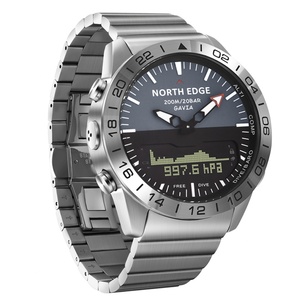
For outdoor sports, trail running, and maritime dive watches (e.g., North Edge and Zeblaze Stratos product families), standard single-frequency GPS suffers from signal degradation caused by atmospheric ionospheric refraction and urban canyon multipath reflections. Next-generation OEM smartwatches integrate dual-band L1+L5 receiver ICs that process signals simultaneously across six global satellite constellations (GPS, GLONASS, Galileo, BeiDou, QZSS, and NAVIC).
| Hardware Parameter | Standard Consumer Smartwatch | Enterprise OEM Rugged Smartwatch | B2B Operational Impact |
|---|---|---|---|
| GNSS Architecture | L1 Band Single-Constellation | L1 + L5 Dual-Band 6-Constellation | Sub-meter track accuracy; zero signal loss under dense foliage or canyons. |
| Water Ingress Rating | 3ATM / IP68 (Static Splash) | 10ATM / 200m Dive / IP69K Hot-Jet | Suitable for high-pressure industrial washing, scuba diving, and water sports. |
| Environmental Rating | Basic Ambient Operational Range | MIL-STD-810H (15 Stress Tests) | Prevents field failure across extreme heat (+65°C), cold (-40°C), and impact. |
| Battery Energy Density | Standard Cobalt 4.2V Chemistry | High-Density Silicon-Anode 4.45V Cell | Extends active GPS tracking duration to 50+ hours; 14–30 day standby. |
| Sensor Integration | Single-Wave Green LED PPG | Multi-Wave Dual-PD PPG + DHT11 Temp/Humidity | Clinical-grade SpO2 precision, skin temp tracking, and ambient environmental data. |
Future-focused smartwatch procurement focuses heavily on multi-sensor fusion. Beyond conventional heart rate monitoring, modern B2B wearable configurations incorporate integrated DHT11 micro-environmental sensors for ambient temperature and relative humidity sensing, piezoelectric barometric altimeters for accurate elevation profiling, and dual-color LED flashlights with dedicated strobe modes for tactical and night-work emergency response.
B2B buyer behavior in the smart wearable ecosystem has evolved dramatically over recent years. Corporate procurement teams are shifting away from fragmented off-the-shelf purchasing toward strategic ODM partnerships that offer deep customization, reliable component sourcing, and software control.
Wholesale buyers no longer accept locked companion apps. Modern enterprise clients require custom BLE SDKs, API access to raw PPG sensor arrays, and white-label iOS/Android app integration (such as the APEXMOVE ecosystem) allowing seamless data pipeline integration into corporate wellness portals or third-party platforms like Strava and Apple Health.
With the upcoming enforcement of the EU Cyber Resilience Act and mandatory updates to EN 18031 cybersecurity requirements for connected radio devices, B2B buyers must partner with manufacturers capable of providing firmware sign-key verification, encrypted Bluetooth pairing protocols, and secure OTA (Over-The-Air) firmware update infrastructure.
To optimize import tariffs and regional taxation schemes in markets like Latin America, India, and Southeast Asia, top bulk smartwatch suppliers now offer Semi-Knocked-Down (SKD) and Completely Knocked-Down (CKD) manufacturing delivery options alongside fully assembled CBU (Completely Built-Up) retail units.
As an industry-leading bulk smartwatch manufacturer and supplier, we offer end-to-end turn-key engineering capabilities designed to take your hardware project from initial CAD modeling to high-volume retail distribution.
Essential technical and commercial insights for importers, distributors, and procurement managers.
Every bulk shipment includes comprehensive compliance test reports conducted by accredited third-party laboratories (such as SGS, TUV, or Intertek). Standard documentation package includes CE RED test reports (Safety EN 62368-1, Health EN 62479, EMC EN 301 489, Radio EN 300 328), RoHS 2.0 chemical analysis, FCC Part 15 subpart C certification for North America, and IP68/10ATM water ingress validation certificates.
For standard stock inventory with neutral packaging, our MOQ starts at 50 to 100 units. For customized OEM orders (custom logo laser etching, custom boot animation, localized packaging), the MOQ is typically 500 to 1,000 units per model. For complete ODM projects requiring custom plastic/metal tooling and PCB layout redesign, the baseline MOQ starts at 3,000 units.
We execute a 5-stage quality assurance protocol: 1) 100% IQC (Incoming Quality Control) on IC chips, display panels, and battery cells; 2) SMT automated optical inspection (AOI); 3) Semi-finished functional testing; 4) 100% 24-hour high-temperature aging and burn-in tests; 5) 100% vacuum-chamber hydrostatic pressure testing for waterproof models. This guarantees an outbound factory RMA rate strictly below 0.15%.
Yes. We provide comprehensive native iOS and Android SDKs alongside API documentation. This enables your software engineering team to extract real-time data streams including heart rate, SpO2, HRV, step counts, sleep cycles, and raw sensor logs directly into your proprietary enterprise application platform.
Standard neutral inventory ships within 3 to 5 business days upon payment confirmation. Custom OEM orders featuring logo branding and customized software typically require 15 to 20 days for mass production. Complete custom-molded ODM projects require approximately 35 to 45 days spanning prototype sign-off, tooling, and final batch assembly.
Connect directly with our engineering and sales engineering team to receive complete CE technical compliance files, volume pricing tiers, sample evaluation units, and OEM customization roadmaps.