
A Military Grade Smartwatch is not simply a regular watch with a tougher case. It is a wearable designed to keep useful functions accessible when exposure, movement, or limited charging complicates daily use. Think of a wet glove, a dusty trail, or a low battery far from an outlet. Small details matter. But “military grade” is not a universal certification, and the label alone does not prove that every model passed the same tests.
The U.S. Department of Defense’s MIL-STD-810H describes environmental engineering considerations and laboratory test methods. It is not a blanket approval for every product carrying military-style language. Manufacturers may test selected conditions, so buyers should check which methods were used and what the results actually cover. Water resistance, screen readability, GPS performance, battery life, and button operation each answer different practical questions. No single specification tells the whole story.
The market context is growing, too. Grand View Research’s Wearable Technology Market Size, Share & Trends Analysis Report estimated the global market at USD 70.30 billion in 2023 and projected a 14.6% compound annual growth rate from 2024 to 2030. That broad figure includes many kinds of wearables, not just rugged watches. It signals wider adoption, not proof that every device is dependable. This guide explains what “military grade” can mean, which specifications deserve scrutiny, and where the evidence may remain thin. A durable watch can still disappoint.
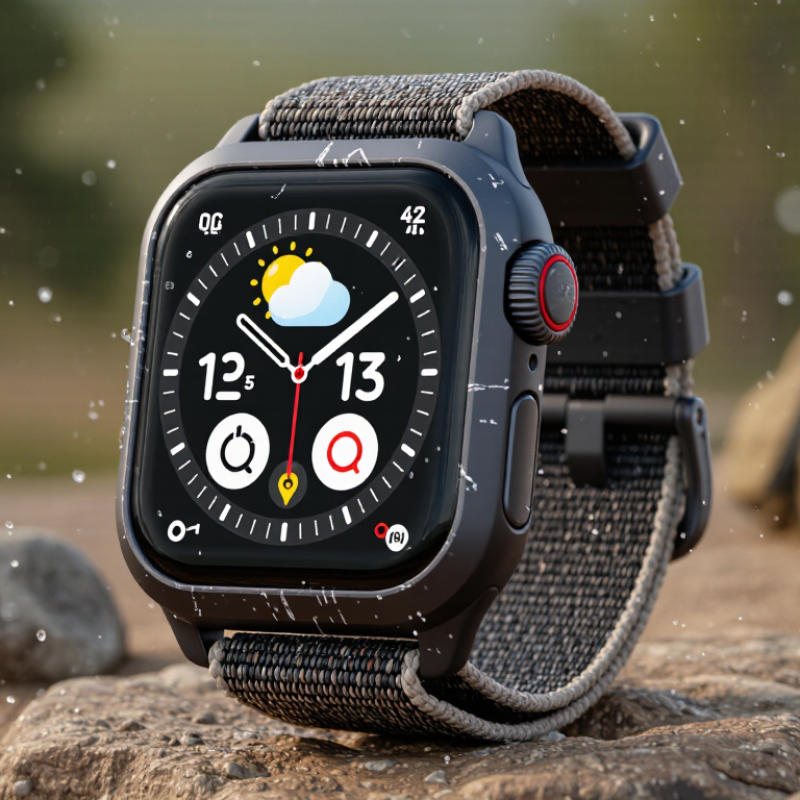
“Military-grade” sounds like an official category, but it is not one universal smartwatch grade. The phrase usually describes ruggedness claims, not a status awarded to every watch by a military authority. That distinction matters. A maker may cite environmental test methods, such as procedures for heat, vibration, or drops, but a reference to a method alone does not prove that a watch passed every test.
Ask what was tested, under which conditions, and on which parts of the device. A watch tested for vibration may still have a screen that scratches easily. One that tolerates a brief drop may not survive repeated impacts on concrete. Test results also depend on the sample, setup, and limits used. Water resistance is a separate matter; it does not automatically follow from ruggedness language.
Look for specific evidence: named procedures, temperature ranges, drop height, test duration, and clear limits on the claim. Check whether testing covered the complete watch, including buttons, seals, and charging contacts. Small details matter. A rating can help compare products, but it cannot predict every real-world accident. The wording may be useful shorthand, yet it can sound more exact than the evidence allows. When details are missing, treat “military-grade” as a claim to verify, not a formal grade.
“Military-grade” is not a single universal smartwatch rating. MIL-STD-810H describes environmental test methods that can be selected for a product; it does not assign every watch one overall grade. By contrast, the IEC 60529 IP code uses defined digits for dust and water protection: the first digit ranges from 0–6 and the second from 0–9. These bars show the number of possible digit levels, including 0—not a measure of overall toughness.
MIL-STD-810H is a set of environmental engineering methods, not one universal pass-or-fail test. Testing plans should reflect how a device may be transported, stored, and used.
For a smartwatch, shock testing can expose weaknesses caused by sudden impacts, such as a hard knock against a metal railing. The watch may be secured to a fixture while sensors record how it responds. Details matter: test setups and severity can differ.
That matters.
Vibration testing applies controlled movement across selected frequencies and intensities. It can reveal loose buttons, strained connections, or display problems that a brief drop test might miss.
Temperature tests may expose a watch to hot and cold conditions, sometimes with changes between them. A cold casing can become uncomfortable, while heat may affect battery behavior or screen readability.
Not quite a guarantee.
A test result applies to specific procedures and conditions; it does not prove a watch will survive every accident or climate. Reports are worth checking, though their details can be difficult to compare.
Real-world wear is messier than a laboratory fixture, and that limitation deserves attention.
“Military grade” sounds reassuring, but an IP rating gives more specific information about dust and water resistance. Under IEC 60529, the 6 in IP68 indicates a dust-tight enclosure during testing. The 8 indicates protection against immersion under conditions specified for that product. There is no single depth or duration that every IP68 smartwatch must meet. That distinction matters.
Check the stated immersion depth and test duration in the watch’s documentation. IP68 does not automatically mean a watch is safe for swimming, hot showers, or every underwater activity. Water pressure changes with movement and depth, while heat, soap, salt, and aging seals can affect protection. A watch may pass a controlled test and still be vulnerable after a hard impact. I would not treat the rating as a promise of permanent waterproofing.
Tips: Rinse off salt or chlorine with fresh water, then dry the watch and its charging contacts. Inspect the case for cracks, and follow the maker’s care instructions. If the test conditions are unclear, ask before relying on immersion protection.
What Is a Military Grade Smartwatch?
How 10 ATM (10 bar) Ratings Relate to ISO 22810 Watch Testing
A 10 ATM rating sounds like a depth promise. It is not. Ten bar equals about 1 megapascals, or roughly the static pressure of a 100-meter water column. That conversion follows pressure-unit guidance in the National Institute of Standards and Technology’s Special Publication 811. It does not mean you can safely take the watch to 100 meters underwater.
ISO 22810:2010 sets requirements and test methods for water-resistant watches. Its tests assess water resistance under specified laboratory conditions, including exposure to pressure. A 10 bar marking should therefore be understood as a tested pressure rating, not a complete description of every real-world use. A watch moving through water, or exposed to a sudden temperature change, faces conditions that a simple depth comparison cannot capture. Small distinction. Big difference.
For practical use, check the manufacturer’s instructions and the exact rating, especially before pressing buttons underwater. Seals can wear, and impacts or servicing may affect water resistance. ISO testing offers a useful benchmark, but it cannot tell you the condition of an individual watch today. I would not treat the number as a field guarantee. That part is easy to overlook.
| Topic | What It Means | Practical Interpretation | Important Limitation |
|---|---|---|---|
| “Military grade” | A marketing description, not a universal watch rating or a single standardized level of toughness. | Check which specific environmental tests were performed, under what conditions, and whether results apply to the complete watch. | The phrase alone does not establish compliance with a military standard or guarantee performance in every field condition. |
| MIL-STD-810 | A U.S. Department of Defense standard containing environmental engineering considerations and laboratory test methods. | Relevant methods can address conditions such as temperature, humidity, vibration, shock, and dust, depending on the test plan. | It is not a single pass/fail “military grade” certification. Test methods and severities should be selected for the intended use. |
| 10 ATM / 10 bar | A watch water-resistance rating associated with a pressure of 10 bar. As a rough static-water equivalent, 10 bar is about 100 metres of water pressure. | It indicates a higher tested pressure-resistance level than common lower water-resistance ratings. | “100 metres” is not a promise that the watch is suitable for diving to that depth. Movement, impact, temperature change, ageing seals, and operation of buttons can affect water resistance. |
| ISO 22810 | ISO 22810:2010 specifies requirements and test methods for the water resistance of watches. | A stated ISO 22810 test claim relates to defined water-resistance checks, rather than a general measure of ruggedness. | Water-resistance testing does not establish resistance to shock, corrosion, dust, extreme temperatures, or every real-world water activity. |
| Pressure rating versus depth | Pressure rises with water depth, and the bar-to-depth comparison is an approximate static-pressure conversion. | Use the watch’s stated activity guidance, not the depth number alone, when deciding whether it is appropriate for swimming or water sports. | Movement through water and other dynamic conditions can create stresses that differ from a static laboratory pressure test. |
| Swimming and water sports | A 10 bar rating is commonly associated with suitability for swimming and some surface-water activities when the watch is in good condition. | Follow the manufacturer’s instructions for the specific watch, including guidance on buttons, crown position, and water exposure. | Do not infer scuba-diving suitability from a 10 ATM marking. ISO 6425 covers requirements for diving watches and is distinct from ISO 22810. |
| Smartwatch features | Touchscreens, microphones, speakers, charging contacts, and buttons add components that may have their own use restrictions around water. | Check whether touch controls work underwater and whether the watch must be dried before charging or connecting accessories. | A water-resistance rating does not automatically mean that every feature or accessory is intended for underwater use. |
| Best way to compare watches | Compare the stated standard, test conditions, water-resistance rating, and any published environmental test details. | Look for specific, verifiable claims rather than relying on labels such as “tactical,” “rugged,” or “military grade.” | Water resistance can diminish over time; inspection and seal replacement may be needed after wear, impact, or servicing. |
Which GNSS, Battery-Life, and Sensor Specifications Matter in Field Use
A rugged watch is useful only when its readings remain dependable away from paved roads. For navigation, check for multi-constellation GNSS support and adjustable location-recording intervals. Frequent updates can sharpen a track, but they use more power. In dense trees or narrow valleys, satellite readings may still drift. No watch removes that limitation.
Battery claims need context. Advertised runtimes often assume limited screen use and fewer location checks. Compare continuous GNSS estimates, not just everyday mode. A practical test should include a cold morning, a dimmed display, and a full day of route logging. Sensors matter, too. A barometer can show elevation changes; a compass needs calibration and can be affected by nearby metal. Wrist-based heart-rate readings may lag during hard movement, so treat them as trends, not medical measurements. I would not rely on one sensor alone.
Tips: Carry a paper route backup and a small power bank. Check for a GNSS lock before leaving shelter. Compare altitude with a known map point; errors happen. That’s normal. With gloves on, a clumsy menu may matter more than a small accuracy gain.
It describes environmental testing methods, not one universal pass-or-fail test. The test plan should match expected handling and use.
A watch may be secured to a fixture while sensors record its response to sudden impacts. A hard knock against a metal railing is one example.
Controlled movement across selected frequencies may expose loose buttons, strained connections, or display problems. A quick drop test might miss them.
No. Tests use specific conditions. Cold can make the casing uncomfortable, while heat may affect battery behavior or screen readability.
No. Results apply only to particular procedures and conditions. Real-world wear is messier, and I would still check the report details.
The “6” indicates a dust-tight enclosure during testing. The “8” means immersion protection under conditions specified for that product.
Not necessarily. Depth and test duration vary by product, and the rating does not promise protection during every underwater activity.
Yes. Heat, soap, salt, aging seals, and hard impacts may weaken protection. A test result is not permanent waterproofing.
Rinse it with fresh water, then dry the case and charging contacts. Check for cracks. Small details matter.
A Military Grade Smartwatch is not automatically certified to one universal military standard. The phrase usually describes a watch designed to withstand demanding conditions, so buyers should check which tests and ratings support the claim. MIL-STD-810H covers a range of environmental methods, including tests for shock, vibration, and temperature; results depend on the specific methods and procedures used. An IP68 rating, based on IEC 60529, indicates protection against dust and immersion under stated test conditions, but it does not guarantee performance in every environment.
A 10 ATM (10 bar) rating relates to water pressure, while ISO 22810 sets requirements for testing water-resistant watches; the rating should not be treated as a promise that every water activity is safe. For field use, also consider GNSS accuracy and reception, battery life with navigation and sensors active, and the usefulness of features such as an altimeter, compass, or heart-rate monitor. Real-world endurance depends on both test conditions and how the watch is used.