A 10ATM Waterproof Smartwatch is designed to handle more than rain, handwashing, or an accidental splash. Its rating describes resistance to pressure equivalent to ten atmospheres under controlled testing. This is often presented as roughly 100 meters of water pressure. That number can sound like a promise of deep-water use. It is not. Useful, but not enough. The rating does not automatically mean you can wear the watch to that depth. Test conditions differ from real swimming, where movement, temperature, and water impact can change the pressure on seals. A relaxed pool swim and a forceful dive are not the same test. That distinction is easy to miss.
Before choosing a watch, check the manufacturer’s activity guidance, not just the ATM label. Look for clear information about swimming, snorkeling, and button use in water. Some models advise against pressing buttons while submerged. Others have specific limits. Salt water, soap, hot showers, and repeated temperature changes may also affect seals over time. Small details count. Inspect the case and strap regularly, especially after a hard knock or years of use. If the watch has been opened for repair, its original water resistance may need professional testing. Ratings are helpful, but they do not replace care or product-specific instructions. Even a well-rated watch has limits. I would treat 10ATM as a useful starting point, then verify that the watch suits the water activities you actually plan to do.
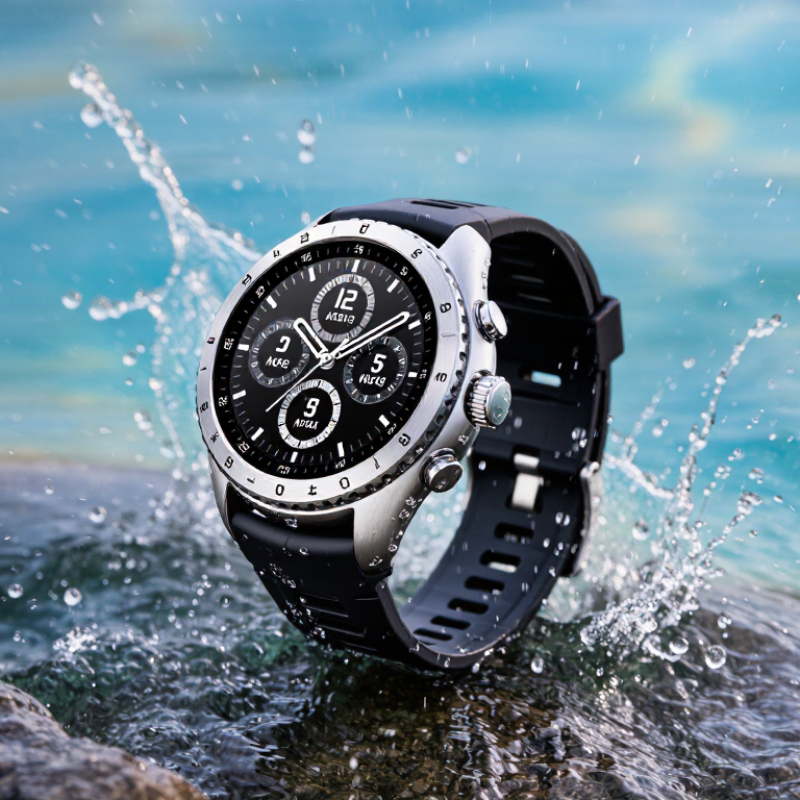
What Is a 10ATM Waterproof Smartwatch?
A 10ATM water-resistance rating indicates that a watch was tested against pressure equivalent to 10 atmospheres, roughly the pressure found 100 meters underwater. That figure is a laboratory benchmark, not a recommended diving depth. Real water movement changes pressure on the case, and a fast arm stroke can create forces that a still test does not represent.
The rating can feel reassuring, perhaps too reassuring. It may suit swimming and some surface-water activities, but the exact limits depend on the watch’s design and testing standard. Check its instructions before snorkeling or using buttons underwater. A shower is not automatically safe: hot water, soap, and steam can affect seals. Avoid high-pressure jets, too.
Water resistance can also change over time. A hard knock, worn seal, or repair may weaken protection, even if the rating remains printed on the case. After swimming in salt water, rinse the watch with fresh water and dry it with a soft cloth. That small step matters. Still, a rating cannot guarantee protection in every situation, and it is easy to forget that when the number looks so definite.
| Dimension | What 10ATM Means | Practical Interpretation |
|---|---|---|
| Pressure rating | 10 ATM is nominally equivalent to 10 atmospheres of pressure, or about 10 bar (1,000 kPa). | This is a pressure-resistance rating, not a promise that a watch can be taken to a depth of 100 metres in every situation. |
| “100 metres” notation | Some rating explanations express 10 ATM as the pressure associated with roughly 100 metres of static water depth. | The figure is a laboratory-style pressure equivalence. Movement, impact, temperature, and water conditions can affect real-world exposure. |
| Swimming | A 10ATM rating is generally intended to provide substantial water resistance. | Swimming may be suitable, but check the watch’s own instructions and make sure buttons or crowns are not operated underwater unless the manufacturer explicitly permits it. |
| Snorkeling and surface water sports | The rating indicates greater resistance than basic splash or rain protection. | Suitability depends on the device’s design and guidance. Water impact from activities such as diving into water can create pressures beyond ordinary static exposure. |
| Scuba diving | 10ATM alone does not certify a smartwatch for scuba diving. | Use a device specifically designed and rated for the intended dive activity, and follow its depth and operating limits. |
| Hot water, steam, and chemicals | An ATM rating does not automatically confirm resistance to heat, steam, soap, or chemicals. | Hot showers, saunas, detergents, and chlorinated or salt water may affect seals or materials. Follow the care instructions for the specific watch. |
| Water-resistance maintenance | Water resistance can diminish over time as seals age or the watch is damaged. | After exposure to salt or chlorinated water, rinse with fresh water if the care guide allows. Avoid using a damaged watch in water and have seals checked when appropriate. |
| Bottom line | 10ATM describes a tested resistance to pressure under specified conditions. | It is a useful indicator for water-related use, but it is not a universal depth guarantee. The watch’s official usage instructions take precedence. |
It means the watch was tested against pressure equivalent to 10 bar, or 1 megapascals. It does not guarantee safe use at every real-world depth.
No. The rating reflects controlled test conditions, not a promise for every activity at that depth. Moving water and temperature changes can add stress.
A laboratory uses controlled pressure equipment, then checks for leaks or moisture inside. Some tests use temperature differences to reveal condensation. Precise, but not the whole story.
Not completely. A pressure chamber cannot imitate every wrist movement in a pool. Real-world conditions vary.
It is designed to withstand substantial water pressure under test conditions. Still, check the care guidance and inspect the watch for damage before swimming.
Rinse it with fresh, cool water, especially around buttons and the strap. Wipe it with a soft, lint-free cloth and let it air-dry.
Only if the care instructions specifically allow it. Otherwise, keep the buttons untouched underwater. A small precaution.
Stop using the watch in water and arrange a professional inspection. Fogging may indicate moisture inside. I once thought a quick rinse solved everything; it did not.
Look for cracks, loose parts, or damage after a hard impact or repair. Aging seals can weaken, and a home check cannot confirm pressure resistance.
A 10ATM Waterproof Smartwatch is designed to withstand water pressure equivalent to 10 atmospheres under controlled testing conditions. This rating generally indicates stronger water resistance than basic splash protection, but it does not mean the watch is suitable for every underwater situation. Testing typically uses laboratory pressure equipment, so real-world movement, temperature changes, and wear can affect performance.
A watch with this rating may be appropriate for activities such as swimming and some surface water sports, depending on the manufacturer’s guidance. It may not be suitable for deep diving, high-pressure water, or sudden impacts in water. To help preserve water resistance, rinse the watch with fresh water after exposure to salt water or chlorine, dry it carefully, and avoid pressing buttons underwater unless the instructions allow it. Seals can wear over time, so regular inspection and proper care matter.