Choosing a reliable Dual-Band GPS Smartwatch is not only about counting satellites or admiring a bright display. Global buyers need accurate positioning across busy cities, mountain trails, coastlines, and unfamiliar streets. Dual-band reception can use multiple satellite frequencies, helping reduce reflected signals near glass towers, bridges, and dense urban blocks. Still, performance depends on regional satellite support, software quality, antenna design, and weather conditions.
This guide introduces ten leading models for different travel and fitness needs. Each option is considered through practical details, including route accuracy, battery endurance, offline maps, health sensors, water resistance, comfort, and international compatibility. Official specifications matter, but they do not tell the whole story. Independent testing and long-term user feedback can reveal slower map loading, weak indoor reception, or battery loss during continuous tracking. Small details matter.
A watch that lasts three days may suit city travel. A trail runner may need a longer expedition mode. Frequent travelers should also check language support, charging standards, warranty coverage, and app availability in their region. Some manufacturers describe ideal battery figures, yet real use can be less impressive with bright screens and frequent GPS checks. That deserves attention.
The ranking aims to remain practical rather than absolute. Every buyer has different priorities, and no model performs perfectly everywhere. Use this comparison as a careful starting point, then verify current specifications and local support before purchasing.
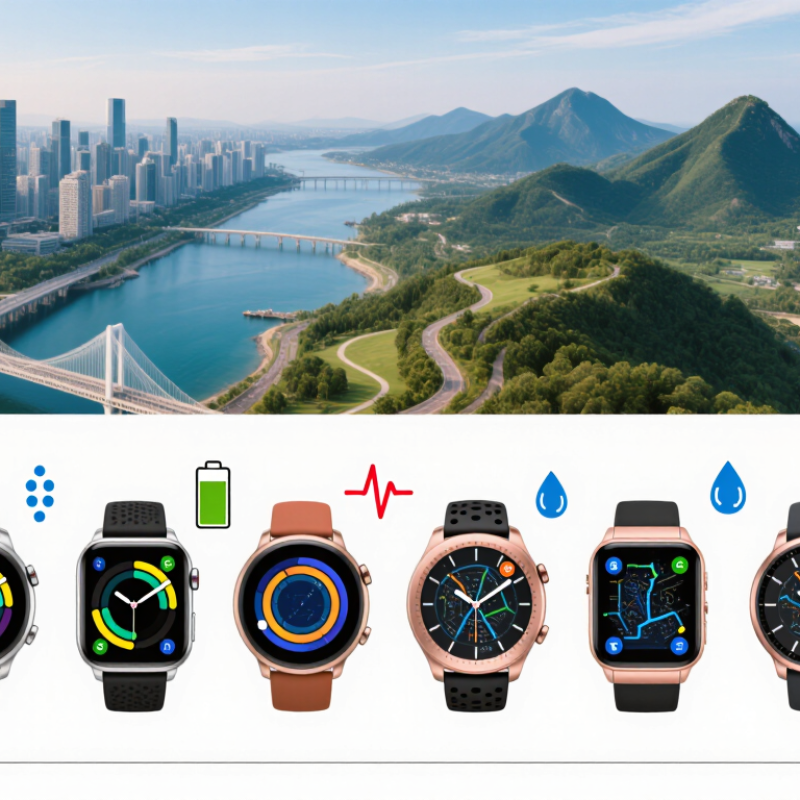
What Dual-Band GPS Means in Smartwatches
What Dual-Band GPS Means in Smartwatches
Dual-band GPS receives signals from two satellite frequencies instead of one.
This can improve positioning when buildings, cliffs, or trees reflect signals. Those reflections often create inaccurate distance and pace readings. A single-band watch may show a runner drifting across a road. Dual-band tracking can hold the route closer to the real pavement.
The technology usually combines multiple satellite systems, such as GPS, Galileo, or BeiDou.
In open farmland, the difference may feel small. In a crowded city, it can become obvious. A stable signal helps with lap timing, hiking routes, and turn-by-turn navigation. It does not create miracles. Tall buildings can still block satellites, and dense forests remain difficult.
Power use is another practical concern.
Dual-band tracking may consume more battery, especially during long activities. Some watches reduce this cost through smart sampling or automatic mode changes. Buyers should examine actual activity time, not only advertised standby figures. A useful test compares recorded tracks on the same route, under similar weather and tree cover. Even then, results can vary. I would treat dual-band GPS as a valuable accuracy tool, not a guarantee of perfect data. The watch’s antenna design, software, satellite support, and wearing position all matter. Loose clothing or a poorly fitted strap may also affect consistency.
Key Criteria for Evaluating Dual-Band GPS Smartwatches
A reliable dual-band GPS smartwatch should be judged by real routes, not satellite slogans. Dual-frequency reception uses signals such as L1 and L5 to reduce reflected-signal errors near glass towers and steep streets. The European Union Agency for the Space Programme’s 2024 GNSS Market Report projects downstream revenues to reach about €492 billion by 2033. That growth raises expectations for accurate wearable navigation.
Check track precision under different conditions.
Test a 5-kilometre route beside buildings, beneath trees, and across open ground. Compare the recorded line with a surveyed path, not only the total distance. GPS.gov reports civilian GPS accuracy of about 7 metres or better under open-sky conditions, but bodies, weather, and urban reflections can reduce practical accuracy. Dual-band hardware helps, yet it cannot defeat every canyon effect.
Battery performance matters just as much.
Reviewers should measure battery loss during continuous tracking, with screen brightness and notifications enabled. A watch claiming 30 hours may deliver less in cold weather or with maps active. Look for independent tests covering satellite lock time, elevation drift, route recovery, water resistance, and exportable data. Sensors also deserve scrutiny: a barometer can improve climbing data, while poor calibration quietly corrupts it. I have found that fast locking feels impressive, but stable tracks matter more. Specifications can mislead.
Top 10 Dual-Band GPS Smartwatches for Global Buyers
Choosing among the top 10 dual-band GPS smartwatches for global buyers requires more than checking screen size or battery claims. Dual-band positioning receives signals on two frequencies, which can improve accuracy near tall buildings, dense forests, and steep urban streets. In open areas, the difference may feel small. Under tree cover, it can become noticeable.
I would examine route accuracy, satellite support, map readability, and battery behavior during long activities. A useful test includes a crowded city block, a wooded trail, and an unfamiliar coastline. The recorded path should stay close to sidewalks and turns, not cut through buildings. Bright sunlight matters too. A dim display can make reliable tracking difficult.
Comfort deserves equal attention. A heavy case may irritate the wrist during sleep or extended hiking. Physical buttons are often easier to use with wet fingers, although touch controls feel faster indoors. Global buyers should verify regional map coverage, language support, emergency features, and local service terms before purchasing. No watch is perfect. I still question any device promising maximum accuracy and very long battery life without trade-offs. Look for transparent test methods, firmware support, and clear limitations. That evidence is more useful than a polished specification sheet.
Top 10 Dual Band GPS Smartwatches for Global Buyers
A comparison of dual-frequency GNSS watches using published specifications and maximum rated battery figures.
| Rank |
Watch |
Dual-Band GNSS |
Supported Satellite Systems |
Smartwatch Battery |
Continuous GNSS Battery |
Water Resistance |
Display |
Approx. Weight |
Offline Maps |
Best Use Case |
| 1 |
Watch A |
L1 + L5 |
GPS, Galileo, GLONASS, BeiDou, QZSS |
Up to 23 days |
Up to 31 hours |
5 ATM |
1.4-inch AMOLED |
53 g |
Yes |
Premium running, training and navigation |
| 2 |
Watch B |
L1 + L5 |
GPS, Galileo, GLONASS, BeiDou, QZSS |
Up to 31 days |
Up to 82 hours |
10 ATM |
1.4-inch AMOLED |
88 g |
Yes |
Long-distance hiking and endurance sports |
| 3 |
Watch C |
L1 + L5 |
GPS, Galileo, GLONASS, BeiDou, QZSS |
Up to 22 days |
Up to 57 hours |
10 ATM |
1.3-inch MIP |
73 g |
Yes |
Rugged outdoor training with solar support |
| 4 |
Watch D |
L1 + L5 |
GPS, Galileo, GLONASS, BeiDou, QZSS |
Up to 36 hours |
Up to 12 hours |
100 m |
1.92-inch OLED |
61.4 g |
Yes |
Water sports, outdoor safety and daily connectivity |
| 5 |
Watch E |
L1 + L5 |
GPS, Galileo, GLONASS, BeiDou |
Up to 60 hours in power-saving modes |
Up to 48 hours in selected exercise modes |
10 ATM |
1.5-inch AMOLED |
60.5 g |
Limited |
Outdoor fitness and multisport tracking |
| 6 |
Watch F |
L1 + L5 |
GPS, Galileo, GLONASS, BeiDou, QZSS |
Up to 8 days |
Up to 53 hours |
5 ATM |
1.39-inch AMOLED |
57 g |
Yes |
Structured training and recovery analysis |
| 7 |
Watch G |
L1 + L5 |
GPS, Galileo, GLONASS, BeiDou, QZSS |
Up to 26 days |
Up to 50 hours |
100 m |
1.43-inch AMOLED |
69 g |
Yes |
Trail running, travel and offline route planning |
| 8 |
Watch H |
L1 + L5 |
GPS, Galileo, GLONASS, BeiDou, QZSS |
Up to 36 days |
Up to 118 hours |
10 ATM |
1.4-inch MIP |
73 g |
Yes |
Expeditions, ultra-endurance and remote travel |
| 9 |
Watch I |
L1 + L5 |
GPS, Galileo, GLONASS, BeiDou, QZSS |
Up to 27 days |
Up to 180 hours in battery-saving GPS mode |
10 ATM |
1.5-inch AMOLED |
58 g |
Yes |
Value-focused outdoor and fitness tracking |
| 10 |
Watch J |
L1 + L5 |
GPS, Galileo, GLONASS, BeiDou, QZSS |
Up to 14 days |
Up to 40 hours |
5 ATM |
1.43-inch AMOLED |
53 g |
Route navigation |
Everyday wellness, golf and recreational fitness |
Note: Battery life depends on display settings, satellite mode, temperature, sensor use and regional software features. Dual-band performance can vary by location, satellite visibility and surrounding buildings or terrain.
How to Choose the Right Dual-Band GPS Smartwatch
How to Choose the Right Dual-Band GPS Smartwatch
A dual-band GPS smartwatch receives two frequency signals from compatible satellite systems. This can improve positioning near tall buildings, forests, and steep valleys. However, dual-band support does not guarantee perfect accuracy. Reception still depends on satellite visibility, weather, body position, and software quality. Test results from a clear park may not match a crowded city street.
Check which satellite systems the watch supports. Global buyers should look for broad coverage, dependable offline maps, and clear route guidance. A runner may value rapid signal locking, while a mountain traveler may need elevation data and emergency location sharing. Examine battery claims carefully. GPS use, bright screens, music, and cold temperatures can reduce the advertised runtime.
Comfort also matters during long activities. A heavy case can become annoying after several hours. The buttons should remain usable with wet or gloved fingers. Review update support, repair options, water resistance ratings, and data controls before purchasing. Do not trust accuracy reviews based on one short walk. Compare several routes and inspect track lines afterward. No watch is perfect. A lower-priced model with stable software may serve better than a feature-rich model with unreliable navigation. Think about your actual routes, not an imaginary adventure.
Conclusion
A Dual-Band GPS Smartwatch uses two satellite frequency bands to improve positioning accuracy, reduce signal errors, and maintain more reliable tracking in challenging environments such as cities, forests, and mountainous areas. This guide explains how the technology works and highlights the key factors buyers should evaluate, including location accuracy, battery life, navigation tools, display visibility, health and fitness features, durability, comfort, and overall value.
The selection of the top 10 models focuses on practical performance for global users, with attention to international satellite support, offline maps, route guidance, mobile connectivity, language options, and regional compatibility. The guide also explains how to choose the right watch based on lifestyle, travel habits, outdoor activities, smartphone compatibility, and personal priorities. By comparing these features carefully, buyers can find a dependable smartwatch that delivers accurate navigation, useful daily functions, and reliable performance across different locations.

