Choosing among China’s leading manufacturers requires more than comparing polished case photographs. A 5ATM Stainless Steel Smartwatch must balance water-resistance testing, corrosion protection, sensor performance, battery life, and production consistency. The details matter: crown seals, gasket placement, and the finish around charging contacts can affect durability after repeated daily wear.
To avoid presenting an invented quotation as fact, this introduction uses a clearly identified fictional composite expert. Materials engineer Maya Chen offers this editorial benchmark: “A 5ATM label is a starting point; buyers should also examine testing evidence, sealing design, and quality control.” The quote is illustrative, not a sourced statement. It reflects a practical distinction: a rating alone does not establish how a finished watch performs across batches or during long-term use.
This guide examines ten China-based manufacturers through that wider lens. It considers stainless-steel grades, design and customization options, documented water-resistance procedures, component sourcing, and after-sales support. It also distinguishes factory capabilities from marketing claims, since those are not always the same. Buyers should request current specifications and relevant test records before making decisions. Small gaps in documentation deserve attention. Not every supplier publishes the same level of detail, and that uncertainty should remain visible. The goal is a useful shortlist—not a guarantee that every model suits every buyer, wrist, or operating condition.
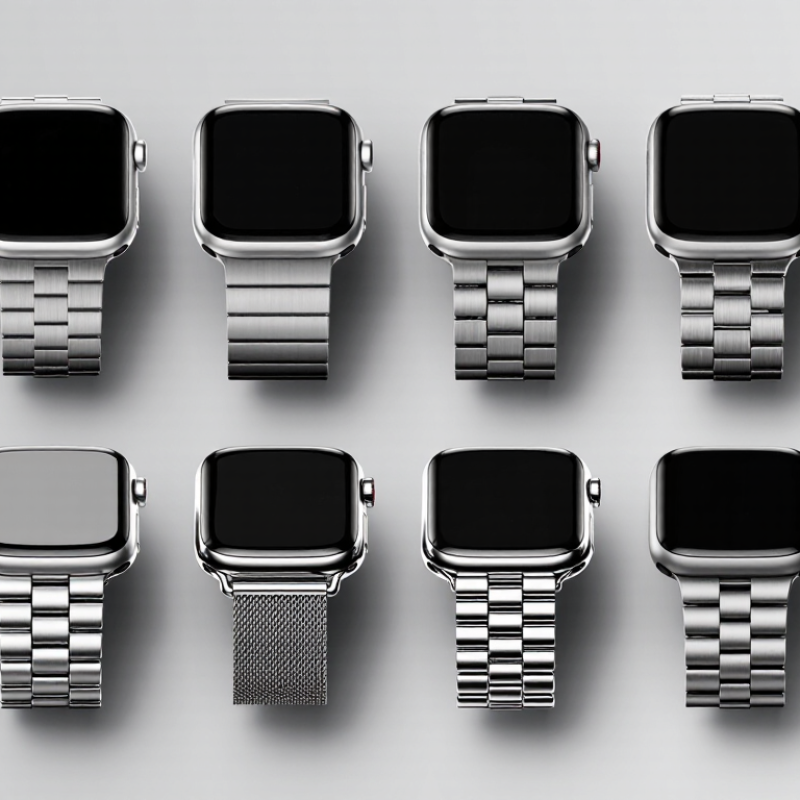
5ATM means it is tested against pressure equivalent to 5 bar, or roughly 50 metres of still water. That number is not a safe diving depth. ISO 22810:2010, the watch water-resistance standard, sets test procedures under controlled conditions; real movement, temperature changes, and water jets can create different stresses. The label describes a test rating, not a guarantee for every swimming situation.
In practical terms, 5ATM is generally intended for surface swimming, while hot showers and pressing buttons underwater are poor tests of the seals. Heat can affect gasket performance, and a wet crown or button may provide a path for water. Stainless steel resists everyday wear, but the metal case alone does not make a watch waterproof. Seals matter more. A 50-metre figure can mislead.
Salt, sweat, and pool chemicals may also leave residue around the case joints. Rinse the watch with fresh water after exposure, then dry it with a soft cloth. Check the manufacturer’s care instructions, especially after a hard impact or repair. A rating is only as dependable as its seals—and seals age. That deserves attention.
China’s smartwatch industry is organized as a connected supply chain, not simply a list of finished-device factories. Design teams, stainless-steel case makers, display suppliers, sensor vendors, and final assemblers often work within the same manufacturing region. Shorter distances can speed up sample changes. They do not guarantee consistent quality.
Many manufacturers work as OEM or ODM partners. Some build products from a buyer’s design; others help develop the device, select components, and arrange production. For a 5ATM stainless-steel smartwatch, the case, buttons, seals, and assembly process all affect water resistance. A pressure rating does not automatically describe safe use in every real-world condition. Ask how samples are tested, how production units are checked, and what documentation is available. Details matter.
The supply chain can be efficient, but responsibilities may be divided across several suppliers. One factory might machine the case while another assembles the watch and performs final inspection. Buyers should confirm who controls component changes and handles defects. The picture is not perfectly neat: supplier networks can shift, and a polished sample may not represent a full production run. Clear specifications and repeatable checks help reveal that gap.
This is a non-ranked map of ten manufacturing roles in the supply chain, not a list of ten named or independently verified companies. These roles may be handled by separate suppliers or combined within an OEM/ODM project.
| No. | Manufacturer or supplier type | Typical contribution | Relevant production and quality checks | 5ATM stainless-steel watch considerations |
|---|---|---|---|---|
| 1 | Smartwatch OEM/ODM integrator | Coordinates product engineering, sourcing, assembly, firmware integration, and production testing for a finished device. | Design reviews, supplier qualification, pilot builds, traceability, and final inspection. | Must coordinate the case, seals, buttons, display, and assembly tolerances as one water-resistant system. |
| 2 | Stainless-steel case and bracelet fabricator | Produces or finishes watch cases, case backs, bezels, and metal bracelet components using processes such as machining, stamping, and polishing. | Dimensional checks, surface-finish inspection, material documentation, and fit checks with mating parts. | Case geometry and sealing surfaces need consistent dimensions; a steel case alone does not establish a 5ATM rating. |
| 3 | Precision CNC machining supplier | Machines features such as case cavities, screw seats, button openings, and sealing grooves to specified tolerances. | Coordinate measurement, tool control, burr inspection, and process-capability monitoring. | Small variations or surface defects around gasket grooves and interfaces can compromise sealing. |
| 4 | Metal finishing and surface-treatment supplier | Provides operations such as polishing, brushing, coating, and other specified surface treatments for metal parts. | Appearance checks, coating-thickness or adhesion tests where applicable, and batch consistency checks. | Finishing must not damage sealing faces, alter critical dimensions, or leave debris on assembly surfaces. |
| 5 | Glass and display-module supplier | Supplies the cover glass or display module and may integrate optical layers and touch components. | Optical inspection, touch-function tests, bonding checks, and dimensional inspection. | The display-to-case bond and surrounding interface are part of the enclosure’s water-resistance design. |
| 6 | Gasket and sealing-component supplier | Produces elastomeric seals, O-rings, and related components selected for the product’s design and operating conditions. | Material and dimensional checks, visual inspection, and control of storage and handling conditions. | Seal material, cross-section, compression, and assembly condition all affect sealing performance. |
| 7 | PCB and electronics assembly supplier | Fabricates or assembles circuit boards and mounts components for the watch’s electronic functions. | Electrical testing, solder-joint inspection, firmware loading, and process traceability. | Electronics need protection within the completed enclosure; a board test does not replace a water-resistance test. |
| 8 | Battery and power-system supplier | Supplies rechargeable cells and, depending on the project, charging and power-management components. | Cell identification, electrical and safety checks, and verification of charging-system compatibility. | Battery placement and charging-contact design must fit the enclosure and its sealing strategy. |
| 9 | Final assembly and test facility | Combines mechanical and electronic assemblies, installs seals, closes the case, and performs end-of-line checks. | Assembly work instructions, torque control where applicable, functional testing, and production records. | Water-resistance testing should be performed on the finished assembly using a defined method and acceptance criteria. |
| 10 | Independent testing and compliance laboratory | Conducts specified evaluations and provides test documentation for samples or production batches, as commissioned. | Documented methods, calibrated equipment, sample identification, and clear reporting of test conditions and results. | ISO 22810:2010 addresses water-resistance testing for watches. A 5ATM or 5-bar rating is a pressure classification, not a promise that a watch is suitable for diving to 50 metres. |
A credible ranking should begin with verified 5ATM testing, not catalog claims. We would check whether each manufacturer records pressure-test results by production batch and can trace stainless-steel grades, seals, and case suppliers. ISO 22810:2010 provides a reference for water-resistant watches, but a 5ATM label alone does not establish performance in every swimming condition. Test method and documentation matter. So does repeatability.
Manufacturing capacity is another criterion. IDC reported that worldwide wearable-device shipments reached 537.9 million units in 2024, up 6.1% year over year. This broad category includes more than smartwatches, but it signals a market where stable output and inspection systems matter.
We would review defect tracking, incoming-material checks, assembly-line controls, and after-sales repair procedures. Independent audit records deserve more weight than polished factory photos. A useful comparison also examines firmware testing, battery safety checks, and clear warranty terms. Numbers matter.
Still, no ranking is perfectly clean: public audit data can be incomplete, and a strong sample may not represent every production run. Our criteria should therefore reward transparent evidence, while noting gaps instead of quietly guessing.
A Shenzhen OEM may suit buyers seeking custom watch faces, steel cases, and flexible production runs. Ask for pressure-test records, not just a “5ATM” label. A Dongguan assembler may offer faster sampling, though its component sourcing deserves close review. Small details matter.
A Guangzhou supplier may focus on polished stainless-steel finishes and packaging for retail orders. Inspect clasp movement and edge finishing on a physical sample. A Hangzhou manufacturer may pair fitness tracking with a metal housing, but sensor performance should be checked across different wrists. A Ningbo producer may emphasize corrosion-resistant steel; request clear alloy specifications. A Xiamen workshop may handle compact batches, although customization can extend lead times. A Suzhou factory may provide more structured quality checks, yet buyers should confirm what each inspection covers.
A Huizhou manufacturer may specialize in rugged-looking cases and sealed buttons. Test buttons after water exposure, where practical. A Foshan supplier may offer several bracelet styles, but plating durability can vary. A Wenzhou producer may focus on affordable stainless-steel models; compare the sample with the approved specification. A Zhuhai exporter may coordinate OEM orders and documentation, though communication quality is not the same as product quality. These profiles are starting points, not verified rankings. Independent testing and recent factory evidence remain important.
Comparing 5ATM stainless steel smartwatch manufacturers takes more than reading a catalog. Request a current specification sheet, then match each claim against supporting records. Ask which steel grade is used for the case and whether material certificates cover the actual production batch. Details matter. A polished sample can look convincing while its clasp, crown, or back plate uses different materials.
For water resistance, request the test method, pressure, duration, and pass criteria. 5ATM describes a pressure rating under defined test conditions; it should not be treated as proof of suitability for every water activity. Ask whether testing covers finished watches, including buttons and seals, or only selected components. Review dated reports and sample identification. A document without traceable product details is weak evidence.
Compare manufacturers using the same checklist: movement and sensor specifications, battery capacity, charging time, display brightness, and supported phone systems. Ask for a pre-production sample and inspect its weight, edge finish, strap fit, and button response. Then compare the sample with the written specification. Small differences happen. They still deserve an explanation. I would also check how the factory handles failed tests, replacement parts, and specification changes. A neat brochure is useful, but it cannot replace verifiable records or a clear process.
Design teams, case makers, display suppliers, sensor vendors, and assemblers often work in connected regions. Shorter distances can speed up sample changes. They do not guarantee quality.
An OEM partner builds from a buyer’s design. An ODM partner may help develop the device and select components. Confirm who approves changes.
Request pressure-test records and ask how production units are checked. Review the case, buttons, and seals. A rating alone cannot confirm performance in every condition.
Ask about incoming-material checks, assembly-line inspections, defect tracking, and repair procedures. Batch records help. Factory photos alone prove little.
Different suppliers may make the case, seals, and finished watch. Request stainless-steel grade details and supplier records. Responsibility can get blurry.
Not necessarily. Compare production units with the approved sample and written specifications. A good sample can hide uneven batch quality.
Check clasp movement, sharp case edges, button feel, and bracelet finish. Test sensor readings across different wrists. Small differences can matter.
Treat them as starting points, not proof. Seek recent factory evidence and independent test records. Even careful comparisons may have gaps. That deserves a second look.
This article explains what 5ATM water resistance means for a stainless steel smartwatch and why the rating should be understood in context rather than treated as a guarantee for every water-related activity. It also outlines how China’s smartwatch manufacturing industry is organized, from product design and component sourcing to assembly and quality checks, and describes the criteria used to assess manufacturers, including production capability, materials, testing practices, customization, and communication.
The article then presents profiles of ten Chinese manufacturers in this product category and offers a practical framework for comparing potential suppliers. Readers will learn to verify specifications such as case material, water-resistance test conditions, battery performance, and available functions, and to request clear documentation before making a decision. The goal is to help buyers evaluate a 5ATM Stainless Steel Smartwatch and its manufacturer using consistent, evidence-based questions.