
Up to 2-Year Warranty  |  Worldwide Delivery  |  Bulk Supply for Global Buyers
0%

Choosing a GPS Trail Running Watch is not simply a matter of selecting the newest model. Trail runners face narrow canyons, dense forests, rain, mud, and long stretches without phone coverage. Each condition can expose weaknesses in tracking, battery life, mapping, or usability.

Ray Maker, a respected sports-technology reviewer, says, “There is no perfect GPS watch; there is only the best fit for your use.” That principle should guide this decision. A watch that performs well during a two-hour forest run may struggle during a twelve-hour mountain race. Battery capacity matters, but so do charging speed and power-saving modes. Multiband GNSS can improve accuracy near cliffs and tall trees. However, it may consume more energy.

The physical design deserves equal attention. A bright screen helps when sunlight reflects from pale rock. Large buttons are safer than delicate touch controls when fingers are cold or wet. Built-in topographic maps can prevent a wrong turn, yet they still require careful route preparation. Optical heart-rate sensors may also lose accuracy during fast climbs or loose wrist movement. Chest straps remain more dependable for serious training analysis.

Small details matter.

This guide examines tracking accuracy, elevation data, navigation, durability, comfort, battery performance, and emergency features. It also questions common assumptions. More features do not automatically create a better trail tool. Your terrain, distance, weather, and experience should shape the final choice. Even the strongest GPS Trail Running Watch cannot replace route knowledge, realistic planning, and sound mountain judgment.
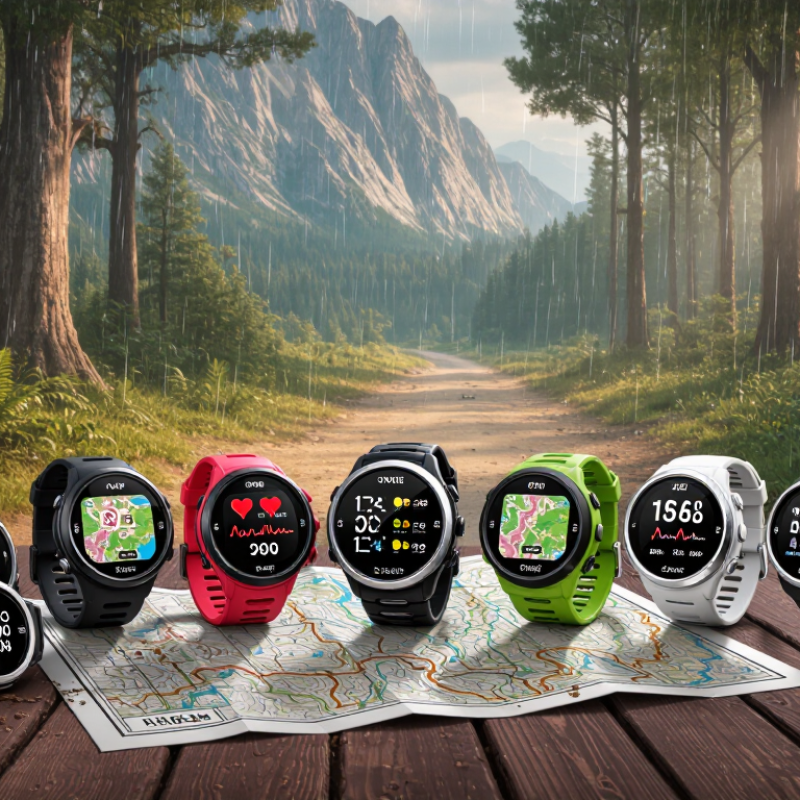
How to Choose a GPS Trail Running Watch?

Understanding the Key Features of a GPS Trail Running Watch

A GPS trail running watch should be judged by its field performance, not its feature count. On wooded climbs, satellite signals can bounce between rocks and branches. Multi-constellation GNSS support helps maintain a steadier track. EUSPA’s User Technology Report explains that combining satellite systems improves availability and positioning reliability. GPS.gov reports approximately seven-meter accuracy under open-sky conditions. Forests are less forgiving.

Battery life matters more than a bright screen. A long mountain route may outlast a standard training session. Choose a watch that records continuously for your longest planned outing, with reserve power for delays. Offline maps should show trails, elevation lines, and water points without a phone connection. Physical buttons are useful with wet fingers or gloves. I have trusted touchscreens in rain before. That was not always wise.

Elevation data deserves careful attention. A barometric altimeter can reveal accumulated climbing, while GPS elevation may fluctuate near steep walls. Compare both readings during training. The Outdoor Industry Association’s 2024 participation report recorded 175.8 million Americans engaging in outdoor recreation during 2023, showing a large and varied user base. That does not mean every runner needs advanced metrics. Heart-rate readings can also weaken in cold weather or on rough descents. Review recovery, navigation, battery, and comfort together. A lighter watch may be the better choice.

Matching Watch Functions to Your Trail Running Needs

How to Choose a GPS Trail Running Watch?

Matching a watch to your trail needs matters more than choosing the longest feature list. During long runs, I have learned that navigation errors create more stress than slow pace. A clear breadcrumb route is essential on unfamiliar trails. Offline maps help when valleys block mobile signals. Check whether the screen remains readable under harsh sunlight. Touch controls may become frustrating with wet or gloved fingers. Physical buttons often work better in cold rain.

Battery life should match your longest realistic outing, not your shortest race. A watch lasting 12 hours may suit local loops, but not an overnight mountain route. GPS modes also change battery performance. Multi-band positioning can improve accuracy near cliffs and dense forests, although it may consume more power. An adjustable recording interval can extend endurance. Still, shorter tracking intervals may miss sharp switchbacks.

Think about the risks you actually face. A barometric altimeter can clarify steep climbs, but it needs calibration. Heart-rate tracking may reveal unusual fatigue, yet wrist readings are imperfect during fast climbs. I once trusted a stable pace display while ignoring heavy breathing. That was a useful warning. Look for weather alerts, emergency contact tools, and water-resistant construction when conditions change quickly. Training metrics are valuable only when you understand their limits. A simple, reliable watch may serve you better than an advanced device you rarely use.

How to Choose a GPS Trail Running Watch?

Match watch functions to your trail running needs

The chart uses a practical priority score from 1 to 5. Short trail runs mainly need reliable GPS and basic elevation data, while long ultras and remote routes require longer battery life, offline maps, navigation tools, and stronger weather awareness. Choose a watch by giving the highest priority to the functions that match your typical distance, terrain, and route complexity.

Comparing GPS Accuracy, Battery Life, and Navigation Tools

Choosing a trail running watch means balancing accuracy, endurance, and usable navigation. The GPS Standard Positioning Service Performance Standard, 5th edition (2020), states a global average positioning accuracy of about 7.8 metres at 95% confidence. Real trails are harder. Dense forests, cliffs, and wet weather can weaken signals. I have seen a watch drift onto a parallel path under heavy tree cover. Multi-constellation tracking can help, but it is not magic.

Battery life matters more during long races. Compare claimed endurance in the exact mode you will use. Continuous GPS, dual-frequency tracking, maps, music, and bright screens consume power quickly. A 30-hour claim may fall sharply with navigation enabled. The European Union Aviation Safety Agency’s lithium-battery guidance also highlights how temperature affects battery performance. Cold mountain mornings can expose weak batteries. That detail is easy to overlook.

Tips:

Test the watch on a familiar, wooded route before race day. Record a ten-kilometre loop and compare the track with a measured course. Look for breadcrumb guidance, turn alerts, offline maps, route-back tools, and readable contours. Touchscreen controls may fail with rain or gloves. Physical buttons feel slower, but they are often safer. I still prefer simple navigation over crowded maps. It reduces distraction, though I may lose useful detail. Check charging time, too. A watch that needs several hours to recharge can complicate a multi-day outing.

Evaluating Durability, Comfort, and Weather Resistance

A GPS trail running watch must survive repeated impacts, grit, and sudden weather changes. Check the case material, screen protection, and button construction before studying advanced features. A raised bezel can protect the display when branches strike your wrist. Physical buttons are often more reliable than touch controls with wet or muddy fingers. During a rocky training run, I once hit my watch against a tree. The screen survived, but the loose strap surprised me.

Comfort matters over several hours. Choose a case that feels balanced, not merely lightweight. A wide, flexible strap can reduce pressure and prevent movement during steep climbs. Ventilation holes help sweat escape, especially in humid conditions. Try the watch with a thin running jacket underneath. Some models feel comfortable indoors but become irritating after three hours outside. That difference is easy to miss.

Weather resistance needs careful reading. Look for a clear water-resistance or ingress-protection rating, not vague phrases such as “ready for adventure.” Water ratings describe testing conditions, but they do not guarantee protection from every storm, temperature change, or impact. Sealed charging ports and a secure lens are valuable in heavy rain. Cold weather can also reduce battery performance. My earlier choice focused too much on maximum battery life, while I ignored glove-friendly controls. That was a poor trade-off on winter routes, where simple operation mattered more than extra statistics.

Choosing the Best Watch Within Your Budget

How to Choose a GPS Trail Running Watch?

Choosing the best watch starts with your budget, not the feature list. The Outdoor Industry Association reported 175.8 million U.S. outdoor participants in 2023. More runners now want dependable navigation without paying for unnecessary technology. The ACSM’s 2024 Worldwide Survey also ranked wearable technology among the leading fitness trends. This popularity can raise prices, but expensive does not always mean suitable.

For casual trail runs, a watch around $150–$250 may provide GPS distance, pace, elevation, and basic route guidance. A $250–$450 model usually adds better battery life, offline maps, stronger navigation, and training metrics. Higher prices can help ultrarunners, but they may be wasteful for two-hour weekend outings. Check the longest route you actually run. Then choose battery life with roughly 30% extra capacity. GPS performance can still weaken under dense trees, steep canyon walls, or heavy rain.

Tips: Test the watch beside a window before trusting it in remote terrain. Compare independent GPS tests, not only manufacturer claims. Look for readable maps in bright sunlight and buttons that work with wet fingers. I once paid more for advanced recovery features and rarely used them. That mistake changed my buying rule: prioritize navigation, battery, comfort, and warranty support. A lighter watch may matter more than another training metric. Leave room for doubt, because every advertised battery estimate uses ideal conditions.

FAQS

What matters most in a GPS trail running watch?

Reliable navigation matters more than a long feature list. Choose steady tracking, useful maps, strong battery life, and comfortable wear. More features can create distraction.

Why is multi-constellation GNSS useful on trails?

Forests, cliffs, and rocks can weaken satellite signals. Using several satellite systems may produce a steadier route. Open-sky accuracy can approach seven meters, but forests are less forgiving.

How much battery life should a trail watch have?

Match battery life to your longest realistic outing. Add about 30% reserve for delays, cold weather, and navigation use. Twelve hours may suit local loops, not overnight routes.

Are offline maps necessary for trail running?

Offline maps show routes without a phone connection. Look for trails, elevation lines, and water points. A clear breadcrumb path can reduce stress on unfamiliar ground.

Are physical buttons better than touchscreens?

Physical buttons usually work better with gloves, wet fingers, and cold rain. Touchscreens may respond poorly during storms. I once trusted a wet touchscreen. That was not wise.

How accurate are elevation and heart-rate readings?

A barometric altimeter can clarify accumulated climbing. GPS elevation may fluctuate near cliffs and steep walls. Wrist heart-rate readings can weaken in cold weather or during rough descents.

How much should a GPS trail running watch cost?

A $150–$250 watch may cover distance, pace, elevation, and basic guidance. Models costing $250–$450 often add maps, longer battery life, and stronger navigation. Expensive does not always mean suitable.

What should runners test before buying?

Test satellite tracking beside a window before remote use. Compare independent tests with advertised claims. Check sunlight readability, wet-button control, comfort, and warranty support. I once paid for advanced metrics and barely used them.

Conclusion

Choosing the right GPS Trail Running Watch begins with understanding which features support your personal running style and terrain. Consider essentials such as reliable GPS tracking, route navigation, elevation data, heart-rate monitoring, training metrics, and emergency or weather alerts. Match these functions to your needs: a casual runner may prefer simplicity, while an experienced trail runner may require advanced mapping, multi-day battery life, and detailed performance insights.

When comparing options, pay close attention to GPS accuracy, battery performance, navigation tools, and how easily the watch works in challenging environments. Durability is equally important, especially if you run through rain, mud, steep terrain, or changing temperatures. A comfortable fit, readable display, secure buttons, and strong weather resistance can greatly improve the experience. Finally, set a realistic budget and prioritize the features you will use most often, choosing a dependable watch that offers the best balance of performance, comfort, and value.

Clara Bennett

Clara Bennett

Clara Bennett is a professional marketing specialist who combines a deep understanding of the company’s products with a clear, customer-focused approach to communication. She regularly contributes expert articles to the company website, helping readers understand product features, practical......