
Up to 2-Year Warranty  |  Worldwide Delivery  |  Bulk Supply for Global Buyers
0%

Choosing the best Heavy-Duty Work Smartwatch in 2026 depends on more than a rugged-looking case. On a noisy job site, a bright display must remain readable beneath a hard hat’s shadow, while buttons should work with gloves and alerts should be easy to notice over machinery. Battery life matters, too: a watch that needs charging halfway through a long shift may be tough in theory but frustrating in practice. Small details count.

This guide compares practical features, including water and dust resistance, impact protection, GPS, health tracking, and compatibility with your phone. It also considers how clearly manufacturers explain testing and limitations, since “rugged” does not mean indestructible. No watch is invincible. A model suited to outdoor construction may feel bulky for warehouse work, and advanced sensors are useful only when their readings fit your needs. We’ll weigh durability against comfort, battery performance, and price, while distinguishing documented specifications from marketing language. Some trade-offs are easy to miss on a product page. The right choice should handle your actual shift, not just look convincing in a studio photo.
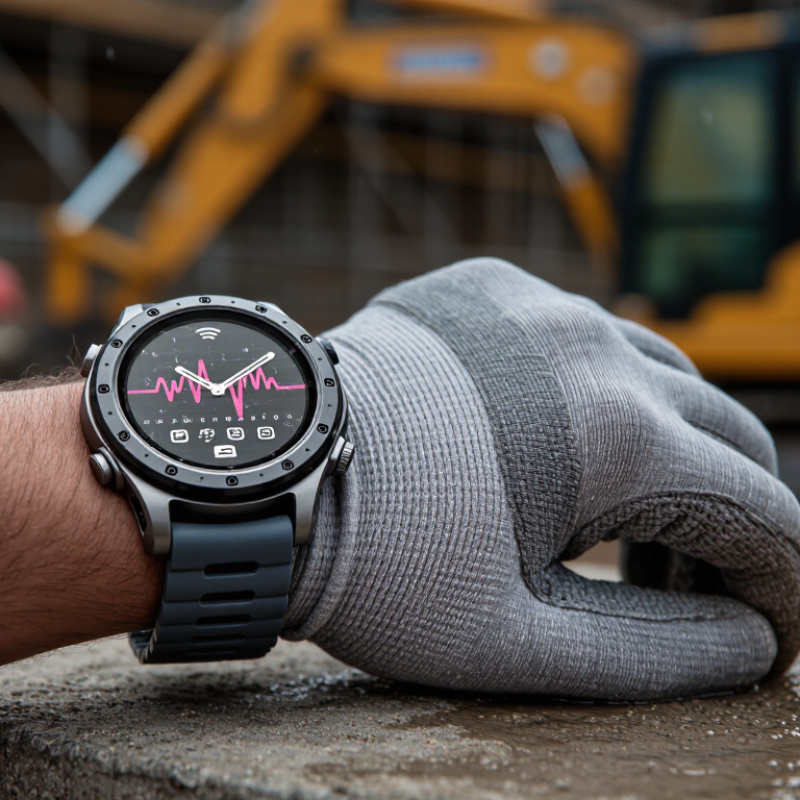
What Is the Best Heavy Duty Work Smartwatch in 2026?

What Defines a Heavy-Duty Work Smartwatch in 2026?

A heavy-duty work smartwatch must survive the actual shift, not just look rugged in a product photo. That means a case and screen that tolerate knocks, dust, sweat, and temperature changes, plus buttons that remain usable with gloves. Water resistance matters, but ratings need context: ISO 22810 defines watch water-resistance testing under specified conditions, not protection from every chemical, pressure washer, or hot-water exposure. Check the stated limits.

Reliability also includes battery life, readable alerts in direct sun, and sensors that keep working during repetitive movement. The U.S. Bureau of Labor Statistics reported 2.6 million nonfatal workplace injuries and illnesses among private-industry workers in 2023. That figure does not measure watch failures, but it underlines why dependable alerts and clear visibility can matter on a busy site. For environmental testing, MIL-STD-810H describes methods tailored to specific conditions; it is not a universal durability certificate. A spec sheet still cannot recreate a ladder rung, wet glove, or vibrating machine. Look for test details, not just a rugged label. Some claims remain hard to compare.

That deserves a closer look.

Which Durability Standards Matter on the Job?

On a jobsite, “rugged” should mean tested against specific hazards, not just a thick case. Start with IEC 60529 ingress protection: an IP6X rating indicates dust-tight protection, while the water rating describes defined exposure conditions. Check the test details; an IP rating does not promise safety in every spray, depth, or temperature. Dust gets everywhere.

For impact and temperature resistance, look for documented testing against relevant MIL-STD-810H methods. This standard describes test methods, not one universal pass certificate, so ask which tests were performed and how the watch was mounted. The risk is practical: the U.S. Bureau of Labor Statistics recorded 1,069 construction fatalities in 2022, including 395 deaths from falls. A smartwatch cannot prevent falls, but a cracked display or failed strap can make alerts and readings unavailable when needed.

Water resistance also needs context. ISO 22810 addresses water-resistant watches, but its tests do not cover every workplace chemical or pressure washer. Check the manufacturer’s stated limits, then inspect buttons, seals, and strap attachment points after rough shifts. I would not treat a single rating as a verdict; test reports rarely mirror the exact grit, vibration, and knocks of a real workday.

How Should Work-Focused Smartwatch Features Be Evaluated?

A work-focused smartwatch should be judged by job demands, not its feature count. Start with readability, glove-friendly controls, vibration strength, and battery life across a full shift. The U.S. Bureau of Labor Statistics recorded 2.6 million nonfatal workplace injury and illness cases in private industry in 2023, or 2.4 cases per 100 full-time workers. That figure does not prove a watch prevents injuries; it does show why dependable alerts and clear incident records deserve scrutiny. Test notifications in the actual setting: bright sun, machine noise, and a moving wrist. Small details matter.

Durability needs evidence, too. IEC 60529 defines IP ratings for protection against dust and water, but a rating is not a promise of survival after repeated impacts, chemical exposure, or temperature swings. Check the test conditions against the worksite. Then examine sensor consistency, offline functions, charging time, and whether data exports into existing safety workflows. A watch that loses connection in a basement may still track time, but not send a timely alert. That matters. One weakness in any checklist is treating sensor readings as medical or safety-grade measurements without validation. Compare readings with an appropriate reference device over several shifts, and record where they disagree. Test it.

Which Models Suit Different Work Environments?

For construction sites and outdoor maintenance, choose a watch with a tough case, a bright display, and physical buttons that work with gloves. GPS can help track routes across large sites, while vibration alerts are easier to notice around noisy equipment. Check the stated dust and water resistance rather than relying on a vague “rugged” label. Details matter.

In warehouses and factories, long battery life may be more useful than advanced mapping. A watch that lasts through a full shift reduces charging interruptions, and a low-profile design is less likely to catch on sleeves or protective gear. Workers who handle machinery should keep notifications discreet and follow site rules; a wearable is not a substitute for approved safety equipment. Even a durable watch can feel bulky after eight hours.

For field technicians, delivery crews, and repair teams, offline access to schedules, timers, and stored notes can help when reception drops. A cellular connection is useful only where coverage supports it. In healthcare or food-handling settings, smooth surfaces may be easier to clean, but confirm that the device and cleaning method suit workplace policy. I would avoid treating one model as best for every job: comfort, charging access, and glove use can change the choice more than a long feature list.

What Is the Best Heavy Duty Work Smartwatch in 2026? - Which Models Suit Different Work Environments?

Work environment Best-fit watch type Priority specifications Useful features Main trade-offs and checks
Construction and general site work Rugged outdoor smartwatch with a protected display and physical buttons Impact-resistant case; water- and dust-resistance rating; glove-friendly controls; screen readable in sunlight Timers, alarms, GPS, compass, and phone notifications Check the specific test standard and operating limits. A rugged rating does not mean the watch is resistant to every impact, solvent, or construction chemical.
Utilities, forestry, and outdoor field work Rugged GPS-focused smartwatch with long battery life Reliable satellite positioning; replaceable or extended-power options where available; buttons usable with gloves; water resistance suited to the job Track recording, compass, altimeter, offline navigation, and waypoint marking GPS accuracy and battery life vary with terrain, settings, temperature, and satellite reception. Confirm that maps can be used offline if coverage is limited.
Remote sites with intermittent cellular coverage Rugged smartwatch with offline navigation; add satellite communication only if supported and required Long operating time; dependable location tracking; clear emergency procedures; controls that remain usable in poor conditions Offline maps, location sharing, and emergency messaging when the device and service support them Cellular calls and messages require compatible service and network coverage. Satellite features are not universal and may require a subscription and an unobstructed view of the sky.
Warehousing and logistics Compact, durable smartwatch with a bright display and strong notification support Comfortable fit for a full shift; screen visibility under warehouse lighting; dependable wireless connection; easy-to-clean surfaces Vibration alerts, shift timers, calendar reminders, and compatible task notifications Confirm compatibility with the employer’s phones, applications, and device-management policies. A smartwatch does not replace a certified barcode scanner or safety equipment.
Wet work, marine tasks, and frequent washdowns Water-resistant rugged smartwatch with sealed physical controls A water-resistance rating appropriate to the task; corrosion-resistant materials; secure strap; clear wet-screen controls Timers, alarms, basic location tools, and large-button operation Water resistance does not automatically cover hot water, high-pressure jets, detergents, or saltwater exposure. Follow the device’s cleaning and maintenance instructions.
Hazardous or explosive atmospheres Only a wearable specifically certified for the site’s hazardous-area classification Certification matching the exact zone, gas or dust group, and applicable workplace rules Use only functions and accessories permitted by the certification and site procedures Ruggedness, water resistance, or military-standard testing is not proof of intrinsic safety. Do not bring an uncertified smartwatch into a classified hazardous area.
Long shifts where charging access is limited Rugged smartwatch with a low-power operating mode and published battery estimates Battery performance for the intended mix of GPS, screen, wireless, and notification use; practical charging time; replaceable strap Power-saving modes, configurable alerts, and charging options suited to the worksite Advertised battery life is usually an estimate under specified settings. Continuous GPS, frequent screen use, cold conditions, and cellular use can reduce runtime.

Selection notes: IP ratings describe protection under defined test conditions; the exact protection depends on the rating and device. “IP68” does not specify one universal immersion depth or duration. A 5 ATM water-resistance rating is based on pressure testing and should not be read as a guaranteed safe operating depth. Military-standard testing applies only to the conditions and methods stated for the device; it is not a guarantee against all workplace damage.

How Can You Choose the Best Watch for Your Needs?

What Is the Best Heavy Duty Work Smartwatch in 2026?
How Can You Choose the Best Watch for Your Needs?

Choose for your actual workday, not just the toughest-looking case. A watch used on a wet job site needs sealed controls, a readable screen, and a secure strap. In a warehouse, glove-friendly buttons and vibration alerts may matter more than deep-water ratings. Check the stated water and dust resistance against your working conditions. No rating makes a device indestructible.

Battery life deserves a real-world check. GPS tracking, bright displays, frequent alerts, and cold weather can reduce runtime. If your shift lasts twelve hours, allow comfortable battery headroom instead of choosing a watch that barely lasts. Check which functions remain available when your phone is elsewhere. Small detail. Big difference.

Try the watch with your work gloves, sleeve, and safety gear. A bulky case can catch on a cuff or feel tiring after several hours. Look for a screen that stays clear in direct sunlight, tactile controls, and a strap that cleans easily. Review warranty terms, repair options, and strap availability; rugged devices still wear out. One imperfect point: feature lists are easy to compare, but comfort is personal. If possible, wear the watch through a full shift and notice what bothers you by lunchtime.

FAQS

What makes a smartwatch suitable for demanding work?

It should handle knocks, dust, sweat, and temperature changes. Usable buttons matter when gloves are on.

What does an IP6X rating tell you?

It indicates dust-tight protection under specified test conditions. Dust gets everywhere. The rating does not describe every workplace hazard.

Does water resistance protect a watch from every liquid?

No. Water-resistance tests do not cover every chemical, pressure washer, or hot-water exposure. Check the stated limits.

What does MIL-STD-810H mean for durability?

It describes environmental test methods, not one universal durability certificate. Ask which tests were performed and how the watch was mounted.

Can a rugged rating guarantee protection from jobsite impacts?

No single rating recreates every ladder knock or vibrating machine. I might still trust a label too much; test details matter.

Why are screen visibility and alerts important?

Readable alerts in direct sun can help during a busy shift. A cracked display may make information harder to access.

What should workers check after a rough shift?

Inspect the buttons, seals, screen, and strap attachment points. Small damage can be easy to miss.

Can a smartwatch prevent workplace injuries?

A watch cannot prevent falls or replace safe work practices. It may provide useful alerts, but its limits matter.

Conclusion

Choosing the best Heavy-Duty Work Smartwatch in 2026 starts with understanding the demands of your job. A suitable watch should be built to handle everyday knocks, dust, moisture, and changing conditions, while remaining comfortable enough for long shifts. Consider relevant durability ratings, but also think about how the watch performs in real working environments rather than relying on specifications alone.

Evaluate practical features such as battery life, clear display readability, reliable notifications, easy-to-use controls, and useful health or activity tracking. The right choice will depend on where and how you work: outdoor crews may prioritize visibility and weather resistance, while busy indoor roles may value comfort and quick access to essential functions. Compare these needs with your budget and preferred design to find a dependable watch that supports your routine without adding unnecessary complexity.

Oliver Hayes

Oliver Hayes

Oliver Hayes is a marketing professional with a deep understanding of the company’s products and the needs they are designed to meet. He regularly contributes expert articles to the company website, where he explains product features, practical applications, and important considerations to help......